Women's Wellness
What Are Lochia Clots After Childbirth? When Should You Worry?
After childbirth, bleeding is part of recovery. But many women are surprised by the blood clots that can appear during the first days postpartum. In most cases, small clots are normal. They happen as the uterus heals and sheds blood and tissue after delivery. But some clots may be a warning sign. Knowing the difference can help you understand what your body is going through.
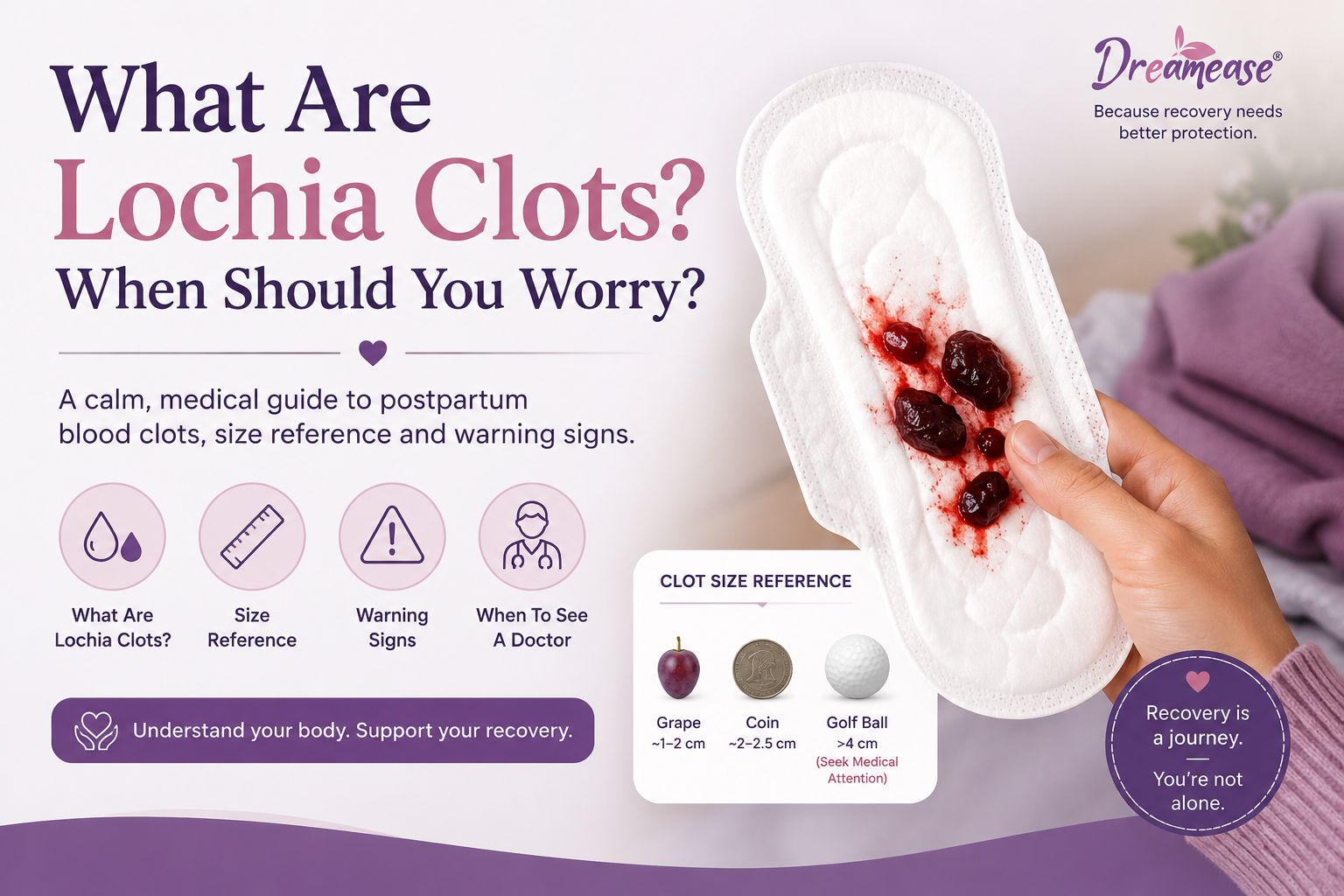
What Are Lochia Clots?
After delivery, the body releases a discharge called lochia.
Lochia contains:
Blood
Uterine lining tissue
Mucus
Fluids from the healing process
Because postpartum bleeding is heavier than a period, blood can collect and clot before leaving the body.
These are called lochia clots.
They are most common:
During the first few days after birth
After sleeping or lying down
During heavier bleeding phases
While breastfeeding, when the uterus contracts
What Size Clots Are Usually Normal?
Small blood clots during postpartum recovery are often expected.
They may look:
Dark red or brown
Thick or jelly-like
About the size of:
A grape
A small coin
Occasionally a small plum in early recovery
Clots are usually more common during the first 24–72 hours after delivery, when flow is heaviest.
When Should You Worry About Postpartum Clots?
Some symptoms should not be ignored.
Contact a doctor if you notice:
Clots larger than a golf ball
Continuous heavy bleeding
Soaking through protection very quickly
Sudden increase in bleeding after it had slowed down
Fever or chills
Severe cramping or abdominal pain
Dizziness or faintness
A strong unpleasant smell from the discharge
These may indicate excessive bleeding or infection.
Why Do Clots Often Appear After Sleeping?
Many women notice a sudden gush of blood or clots when standing up after resting.
This is common.
While lying down, blood can collect inside the vagina.
When you stand, gravity causes the pooled blood and clots to come out at once.
This is one reason nighttime leakage is common during postpartum recovery.
Are Lochia Clots Different From Period Clots?
Yes.
Postpartum bleeding is clinically different from menstrual bleeding.
Lochia is part of healing after childbirth.
It may contain tissue and recovery discharge that are not part of a normal period.
Postpartum flow is often:
Heavier
Longer-lasting
More unpredictable
More prone to sudden gushes and clotting
This is recovery bleeding.
Not routine menstruation.
How Long Do Lochia Clots Last?
Clots are usually most common during the first week postpartum.
As recovery progresses:
Bleeding gradually becomes lighter
Clots become smaller and less frequent
Flow changes from bright red to pink, brown, then pale yellow or white
Recovery timelines vary from person to person.
Managing Heavy Postpartum Flow
During postpartum recovery, many women experience:
Leakage while sleeping
Frequent changes
Discomfort from prolonged moisture
Difficulty managing sudden heavy flow
Products designed for regular periods may not always provide enough coverage for postpartum bleeding.
Recovery-level flow often requires:
Higher absorbency
Better side coverage
Overnight protection
A more secure fit during movement and rest
The Bottom Line
Lochia clots can be a normal part of postpartum healing.
Especially during the first few days after childbirth.
But very large clots, heavy bleeding, fever, or dizziness should always be checked by a medical professional.
Because postpartum bleeding is not just a period.
It is part of recovery.