Women's Wellness
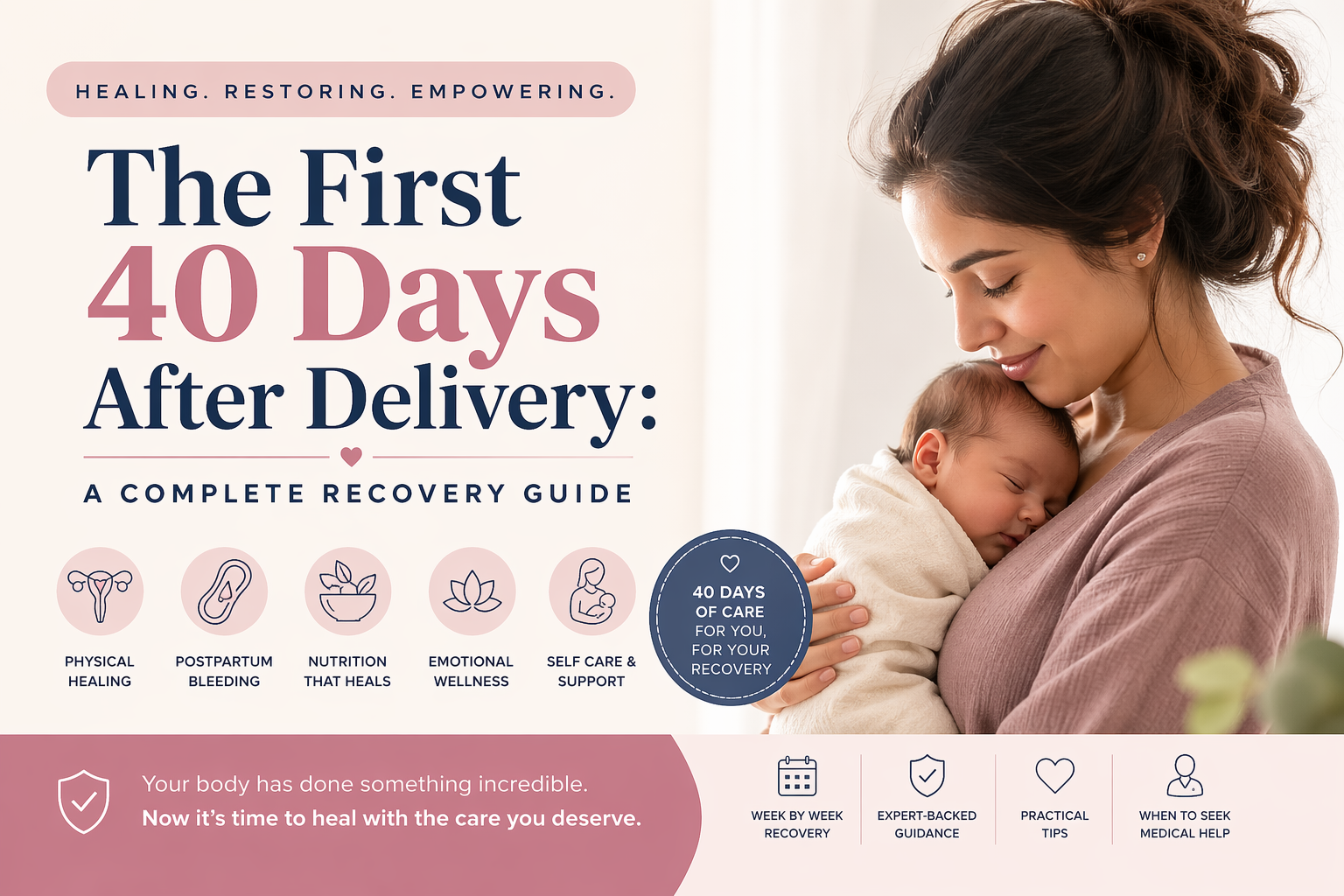
The First 40 Days After Delivery: A Complete Recovery Guide
This guide breaks down what actually happens during these 40 days, and how to recover the right way.
Why the First 40 Days Matter
After delivery, your body undergoes one of the most intense recovery phases it will ever experience.
Your uterus shrinks back to its original size
Hormones fluctuate rapidly
Blood loss continues for weeks
Muscles, tissues, and (in some cases) surgical wounds begin healing
This is not a quick reset. It’s a structured recovery process that needs attention, care, and the right support.
Week-by-Week Breakdown of Recovery
Days 1–7: Acute Healing Phase
This is the most physically demanding stage.
Heavy postpartum bleeding (lochia)
Uterine contractions (afterpains)
Swelling, soreness, or stitches (vaginal or C-section)
Extreme fatigue
What you need:
Maximum absorbency protection
Full coverage to prevent leaks
Soft, non-irritating materials
Strict rest
Movement should be minimal. Your body is stabilizing after childbirth.
Days 8–14: Transition Phase
Your body begins adjusting, but recovery is still ongoing.
Bleeding reduces but continues
Energy slightly improves
Stitches begin healing
Hormonal shifts may trigger mood swings
Focus on:
Maintaining hygiene
Gentle movement (short walks)
Nutrient-rich meals
Emotional support
This is when many women try to “get back to normal”—but pushing too early can delay recovery.
Days 15–30: Rebuilding Phase
You may start feeling “better,” but healing is still incomplete.
Light to moderate discharge
Reduced pain
Gradual return of strength
Important:
Avoid heavy lifting
Continue using reliable protection
Start light pelvic floor exercises (if approved by doctor)
Internal healing is still in progress—even if symptoms feel manageable.
Days 30–40: Stabilization Phase
Your body is nearing recovery, but not fully there yet.
Minimal discharge (or none)
Improved energy levels
Better mobility
This stage is about:
Slowly returning to routine
Monitoring any unusual symptoms
Preparing for your postnatal check-up
Postpartum Bleeding: What to Expect
Bleeding after delivery is not a period—it’s your body healing.
Can last up to 6 weeks
Flow varies from heavy to light
May include clots in early days
Key tip: Always choose protection designed for heavy, unpredictable flow—not regular period products.
Hygiene & Protection: Where Most Women Go Wrong
One of the biggest gaps in postpartum care is hygiene.
Using regular pads often leads to:
Leakage
Discomfort
Skin irritation
Lack of confidence
Your body needs:
Higher absorbency
Better coverage (front + back)
Breathable, soft fabric
Secure fit that doesn’t disturb healing areas
This isn’t about convenience—it’s about preventing complications and ensuring comfort during recovery.
Nutrition for Faster Healing
Your body needs fuel to repair itself.
Focus on:
Iron-rich foods (to recover blood loss)
Protein (for tissue healing)
Fluids (to stay hydrated and support milk production)
Fiber (to prevent constipation, especially after stitches or surgery)
Avoid crash dieting or restriction—this is a recovery phase, not a weight-loss phase.
Emotional Recovery Is Real
The first 40 days can feel overwhelming.
Sudden mood changes
Anxiety or irritability
Feeling disconnected or exhausted
This is normal due to hormonal shifts and sleep deprivation—but it shouldn’t be ignored.
Seek support if:
You feel persistently low
You struggle to bond with your baby
Anxiety interferes with daily life
Mental recovery is just as important as physical healing.
Warning Signs You Should Not Ignore
Contact your doctor immediately if you experience:
Very heavy bleeding (soaking protection within an hour)
Large clots
Fever or chills
Foul-smelling discharge
Severe abdominal or incision pain
Early intervention prevents serious complications.
What Most Recovery Advice Misses
The biggest mistake? Treating postpartum recovery as optional care instead of essential care.
Women are often told:
“You’ll be fine in a few days”
“It’s just like a heavy period”
Neither is true.
Recovery takes time, planning, and the right products.
Final Thought
The first 40 days after delivery are not about “bouncing back.”
They are about healing forward.
When you give your body the care it actually needs—
recovery becomes smoother, safer, and far more comfortable.