Women's Wellness
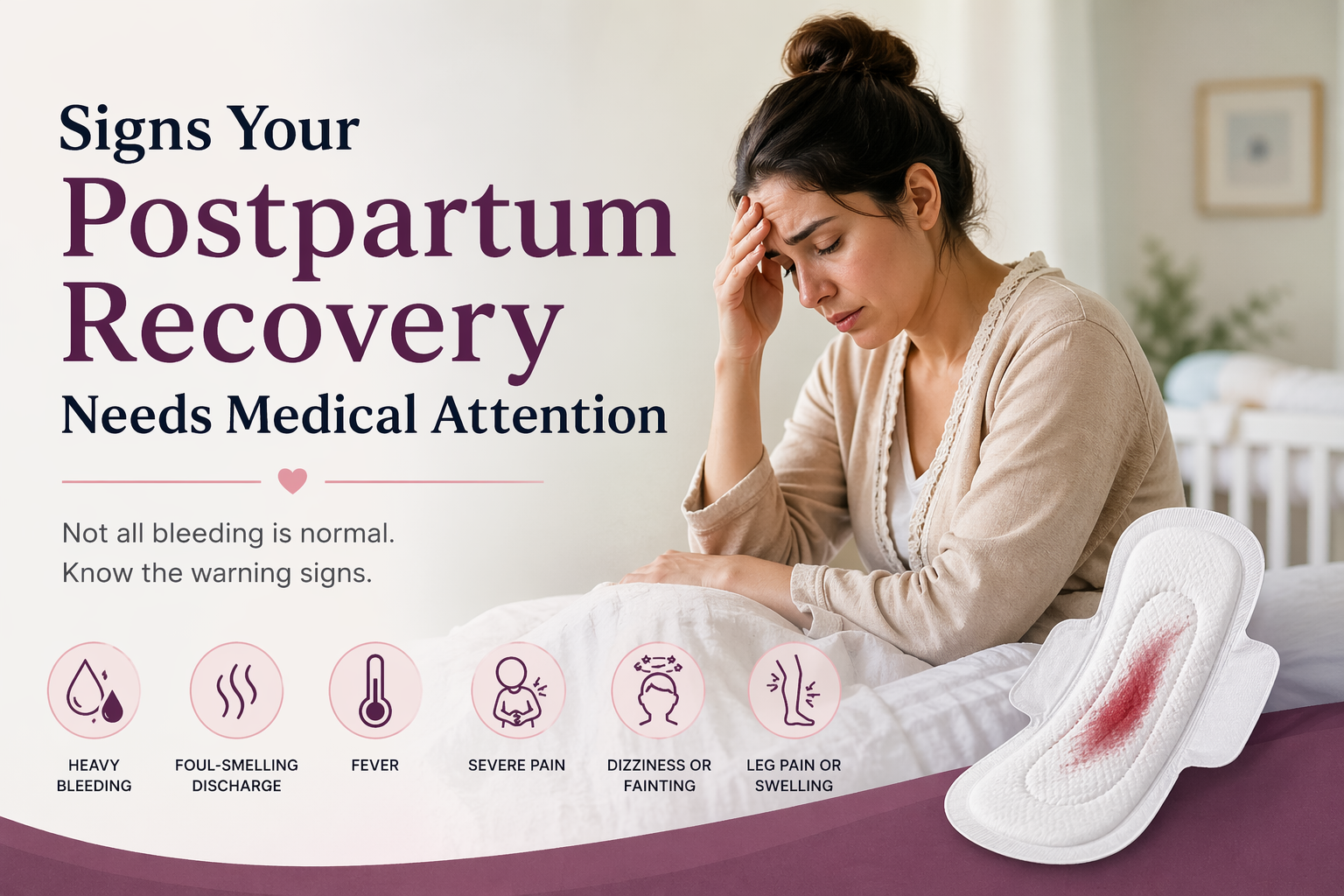
Signs Your Postpartum Recovery Needs Medical Attention
Postpartum bleeding and recovery are often misunderstood. Learn the critical signs that indicate when your body needs medical attention—not just rest.
Here is a clinically structured, authority-driven blog aligned with Dreamease positioning:
Title
Signs Your Postpartum Recovery Needs Medical Attention
Excerpt (Short Description)
Postpartum bleeding and recovery are often misunderstood. Learn the critical signs that indicate when your body needs medical attention—not just rest.
Content
Not all bleeding after childbirth is normal
Postpartum recovery involves a natural healing process. Bleeding—known as lochia—is expected.
But not all bleeding is part of recovery.
Some signs indicate that your body is not healing as it should. Recognizing these early is critical for preventing complications.
1. Excessively Heavy Bleeding
Bleeding is expected. However, the volume matters.
You should seek medical attention if:
You are soaking one pad every hour or faster
Large blood clots (bigger than a golf ball) are present
Bleeding suddenly becomes heavier after slowing down
This may indicate postpartum hemorrhage, which requires immediate care.
2. Foul-Smelling Discharge
Normal lochia has a mild, menstrual-like smell.
A strong, unpleasant odor can signal infection.
Watch for:
Yellow or green discharge
Fever along with discharge
Pelvic pain
This could indicate uterine infection (endometritis) and should not be ignored.
3. Persistent or Rising Fever
A slight temperature variation can happen after delivery.
But a consistent fever (above 38°C) is not part of normal recovery.
It may indicate:
Infection in the uterus
Urinary tract infection
Wound infection (C-section or stitches)
Medical evaluation is necessary.
4. Severe Abdominal or Pelvic Pain
Mild cramping is expected as the uterus contracts.
Severe or worsening pain is not.
Pay attention if:
Pain increases instead of decreasing
Pain is sharp or localized
It interferes with movement or rest
This may signal internal complications or infection.
5. Sudden Stop in Bleeding Too Early
Postpartum bleeding gradually reduces over weeks.
If it stops abruptly within the first few days, it may indicate retained blood or clots inside the uterus.
This can lead to infection if untreated.
6. Dizziness, Weakness, or Fainting
Recovery involves fatigue, but not instability.
Seek help if you experience:
Frequent dizziness
Shortness of breath
Rapid heartbeat
Fainting episodes
These may indicate blood loss or anemia.
7. Swelling, Redness, or Pain in Legs
This is a critical but often overlooked sign.
Watch for:
Pain in one leg
Swelling or warmth
Skin redness
These may indicate blood clots (deep vein thrombosis), which require urgent care.
When to Act Immediately
Seek urgent medical care if you experience:
Heavy bleeding that soaks pads rapidly
High fever
Severe pain
Fainting or breathlessness
Do not wait for symptoms to settle on their own.
Recovery Requires the Right Support
Postpartum recovery is not the same as a period.
The body is healing from internal wounds. The flow is heavier, longer, and less predictable.
Using products designed for routine menstruation often fails in this phase.
Recovery needs:
Higher absorption
Full coverage protection
Stability during rest and sleep
Final Note
Your body communicates clearly during recovery.
Ignoring early warning signs can delay healing and increase risk.
If something feels different, heavier, or more intense than expected—it is worth checking.
Because not all bleeding is a period.
Some bleeding is recovery.