Women's Wellness
Postpartum Recovery: What Your Body Is Actually Going Through (And Why It Matters)
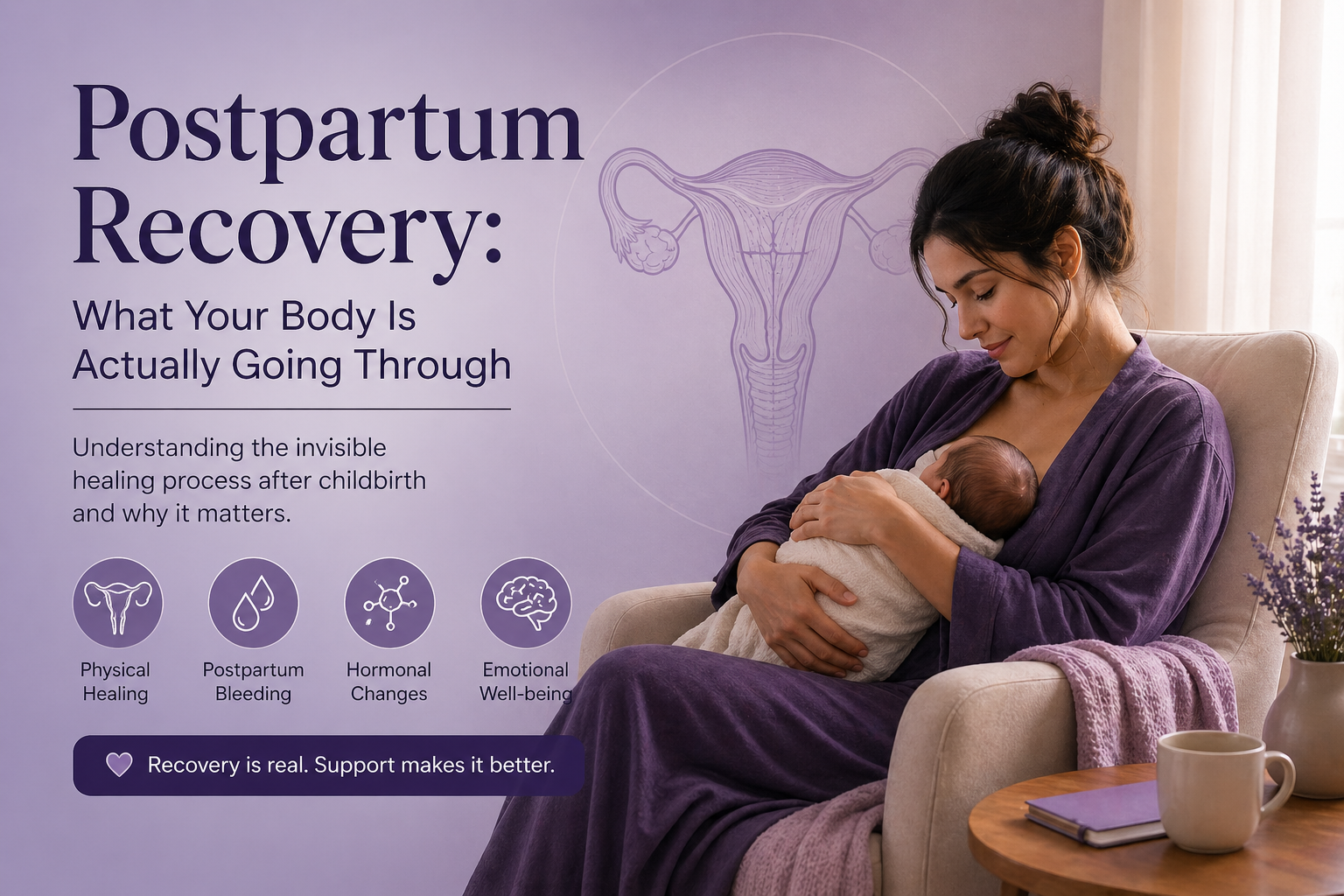
Postpartum recovery is a critical yet often overlooked phase where a woman’s body heals after childbirth. From prolonged bleeding to internal tissue repair and hormonal shifts, this period requires proper care, hygiene, and understanding.
Introduction
After childbirth, most of the attention shifts to the newborn. But behind the scenes, a woman’s body is going through one of the most intense recovery phases it will ever experience.
From the outside, everything may appear normal within days. Internally, however, healing is still ongoing — and often misunderstood.
Understanding this phase is essential, not just for mothers, but for families and caregivers as well.
What Is Postpartum Recovery?
Postpartum recovery refers to the period after childbirth when the body gradually returns to its pre-pregnancy state.
This phase typically lasts 6 weeks, but in many cases, full recovery can take longer depending on:
Type of delivery (vaginal or C-section)
Overall health
Complications during childbirth
Level of rest and care
Postpartum Bleeding (Lochia): What to Expect
One of the most significant aspects of postpartum recovery is lochia, or vaginal bleeding after delivery.
This is not the same as a regular period.
Stages of Lochia
Lochia Rubra (Days 1–4)
Bright red bleeding
May include small clots
Heaviest flow phase
Lochia Serosa (Days 4–10)
Pinkish or brown discharge
Reduced flow
Lochia Alba (Up to 6 weeks)
Yellowish or white discharge
Light and gradual
The intensity varies, but it is normal for bleeding to continue for several weeks.
Internal Healing: What You Can’t See
Even when visible symptoms reduce, internal healing is still happening.
Uterine Recovery
The uterus gradually shrinks back to its normal size — a process called involution.
Tissue Repair
Vaginal tissues heal from stretching or tearing
C-section stitches recover over time
Internal inflammation reduces slowly
Hormonal Changes
There is a sharp drop in pregnancy hormones, which can affect:
Mood
Energy levels
Skin and hair
Common Physical Challenges
Postpartum recovery often includes:
Fatigue and weakness
Lower abdominal pain or cramping
Back discomfort
Breast tenderness
Perineal soreness or incision pain
These are normal but require proper care and attention.
Why Hygiene Is Crucial During Recovery
During postpartum bleeding, the body is more vulnerable to infections.
Maintaining hygiene becomes essential because:
The cervix takes time to close completely
Internal tissues are still healing
Prolonged moisture can increase bacterial growth
Simple habits like regular changing, breathable fabrics, and clean surroundings can significantly reduce risks.
Emotional and Mental Recovery
Recovery is not only physical.
Many women experience:
Mood swings
Anxiety
“Baby blues”
Emotional sensitivity
In some cases, this can develop into postpartum depression, which requires professional support.
What Helps in a Smoother Recovery
While every recovery journey is different, certain practices can help:
Adequate rest
Balanced nutrition
Hydration
Gentle movement (as advised by a doctor)
Emotional support from family
Final Thoughts
Postpartum recovery is often invisible to others but deeply significant for the mother.
It is not a quick transition back to normal-it is a gradual healing process that deserves awareness, care, and respect.
The more we understand it, the better we can support it.