Women's Wellness
Postpartum Hemorrhage (PPH): Causes, Symptoms, Treatment & Prevention
Postpartum hemorrhage (PPH) is the leading cause of maternal death worldwide. Learn the causes, symptoms, the 4 Ts, treatment protocols, and how PPH can be prevented.
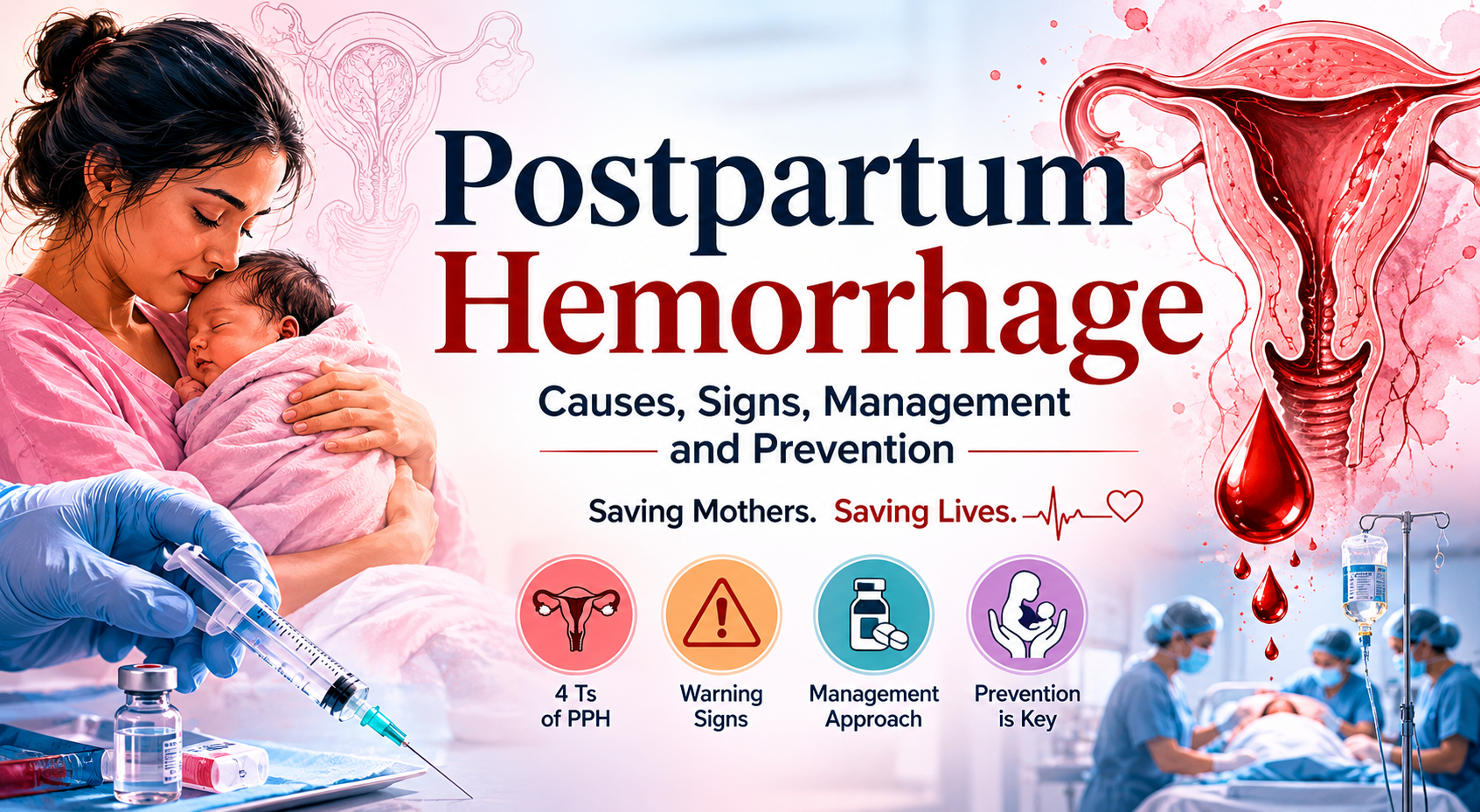
What Is Postpartum Hemorrhage (PPH)?
Postpartum hemorrhage (PPH) is excessive bleeding after childbirth — defined as blood loss of 500 ml or more following vaginal delivery, or 1,000 ml or more after a caesarean section. Postpartum hemorrhage is the single leading cause of maternal mortality worldwide, responsible for nearly 25% of all maternal deaths according to the World Health Organization (WHO).
In India, PPH continues to account for a significant share of maternal deaths, making awareness, early diagnosis, and timely treatment critical for every expectant mother, obstetrician, midwife, and healthcare facility.
Types of Postpartum Hemorrhage
There are two main types of PPH:
Primary (early) postpartum hemorrhage — occurs within 24 hours of delivery. This is the most common and most dangerous form.
Secondary (late) postpartum hemorrhage — occurs between 24 hours and 12 weeks after delivery, usually due to retained placental tissue or infection.
Causes of Postpartum Hemorrhage: The 4 Ts
Obstetricians use the "4 Ts" mnemonic to remember the four main causes of postpartum hemorrhage:
1. Tone — Uterine Atony (≈70% of PPH cases)
Uterine atony is the most common cause of postpartum hemorrhage. After delivery, the uterus must contract to compress the blood vessels that supplied the placenta. When it fails to contract, heavy bleeding follows. Risk factors include prolonged labour, multiple pregnancy, polyhydramnios, grand multiparity, and prolonged oxytocin use.
2. Trauma — Genital Tract Injury (≈20%)
Tears in the cervix, vagina, or perineum, episiotomies, uterine rupture, or surgical incisions during caesarean section can cause significant bleeding. Instrumental deliveries using forceps or vacuum increase this risk.
3. Tissue — Retained Placenta (≈10%)
Retained placental fragments prevent the uterus from contracting completely. Abnormal placental attachment — placenta accreta, increta, or percreta — is increasingly common in women with previous caesarean scars.
4. Thrombin — Coagulation Disorders (≈1%)
Bleeding disorders, severe pre-eclampsia, HELLP syndrome, amniotic fluid embolism, and disseminated intravascular coagulation (DIC) impair clotting and worsen PPH.
Symptoms and Warning Signs of Postpartum Hemorrhage
Recognising the early signs of postpartum hemorrhage can save a life. Watch for:
Soaking through one or more sanitary pads per hour
Passing large blood clots bigger than a plum
A soft, "boggy" uterus on examination
Rapid heartbeat or falling blood pressure
Dizziness, fainting, or confusion
Pale, cold, or clammy skin
Persistent bright red vaginal bleeding beyond the first 24 hours
Any of these symptoms requires immediate emergency medical attention.
Risk Factors for Postpartum Hemorrhage
Women at higher risk of PPH include those with:
A previous history of postpartum hemorrhage
Multiple pregnancy (twins or triplets)
Placenta praevia or placenta accreta
Prolonged or induced labour
Large baby (macrosomia)
Pre-eclampsia or gestational hypertension
Maternal anaemia
Obesity (BMI > 35)
Advanced maternal age
Previous caesarean delivery
Identifying these risk factors before delivery allows clinicians to plan birth in appropriately equipped facilities.
Postpartum Hemorrhage Treatment and Management
Modern PPH management follows a stepwise, time-critical protocol — every minute counts.
Step 1: Immediate Response
Call for emergency obstetric help
Begin uterine massage
Establish two large-bore IV lines
Start IV fluids and oxygen
Cross-match blood and prepare blood products
Step 2: Uterotonic Medications
First-line drugs for postpartum hemorrhage caused by uterine atony include:
Oxytocin — first-line, WHO-recommended
Carbetocin — long-acting alternative
Methylergometrine (Methergine)
Carboprost (PGF2α / Hemabate)
Misoprostol — useful in low-resource settings
Tranexamic acid (TXA) — proven by the WOMAN trial to reduce death from bleeding when given within 3 hours
Step 3: Mechanical and Surgical Interventions
When medications fail, treatment escalates to:
Bimanual uterine compression
Intrauterine balloon tamponade (e.g., Bakri balloon)
B-Lynch compression sutures
Uterine artery ligation or embolisation
Emergency hysterectomy as a final, life-saving measure
Step 4: Safe Injection Practices in PPH Emergencies
During a postpartum hemorrhage emergency, multiple IV and IM medications must be administered rapidly. Auto-disable and safety-engineered syringes — such as Aurum's Au-Safe range — prevent needlestick injuries to busy clinical staff and eliminate the risk of reuse, a critical infection-control safeguard in any modern labour room.
How to Prevent Postpartum Hemorrhage
The most effective PPH prevention strategy is Active Management of the Third Stage of Labour (AMTSL), recommended by WHO and FIGO. AMTSL includes:
Prophylactic uterotonic (oxytocin) within one minute of birth
Controlled cord traction
Uterine massage after placental delivery
Additional preventive measures include:
Treating antenatal anaemia
Skilled birth attendance for every delivery
Hospital delivery for high-risk pregnancies
Functional emergency obstetric care (EmOC) at every level
Stocking essential medicines, IV access devices, and safe injection equipment
Postpartum Hemorrhage Statistics (2026)
PPH causes ~70,000 maternal deaths globally each year
Accounts for nearly 25% of all maternal mortality worldwide
Over 99% of PPH deaths occur in low- and middle-income countries
India contributes a substantial share of global PPH deaths
Most PPH deaths occur within the first 4 hours after delivery
Conclusion: Why Awareness of Postpartum Hemorrhage Matters
Postpartum hemorrhage is predictable, preventable, and treatable when recognised early. A chain of care — trained personnel, evidence-based protocols, essential medicines like oxytocin and tranexamic acid, and safe, reliable medical devices — protects every mother in the critical hours after childbirth.
Equipping labour rooms with quality safety syringes, IV cannulas, and infection-control products is a foundational step in any modern PPH preparedness plan.
Questions readers ask
What is postpartum hemorrhage?
Postpartum hemorrhage (PPH) is excessive bleeding after childbirth — defined as 500 ml or more of blood loss after vaginal delivery, or 1,000 ml or more after caesarean section. It is the leading cause of maternal death worldwide.
What is the most common cause of postpartum hemorrhage?
The most common cause is uterine atony-the failure of the uterus to contract after delivery. It accounts for approximately 70% of all PPH cases.
What are the 4 Ts of postpartum hemorrhage?
The 4 Ts are Tone (uterine atony), Trauma (genital tract injury), Tissue (retained placenta), and Thrombin (coagulation disorders).
How is postpartum hemorrhage treated?
PPH is treated with uterine massage, uterotonic drugs like oxytocin and tranexamic acid, intrauterine balloon tamponade, compression sutures, and in severe cases, hysterectomy.
Can postpartum hemorrhage be prevented?
Yes. Active Management of the Third Stage of Labour (AMTSL), prophylactic oxytocin within one minute of birth, treating antenatal anaemia, and skilled birth attendance significantly reduce PPH risk.
How long after delivery can postpartum hemorrhage occur?
Primary PPH occurs within 24 hours of delivery. Secondary PPH can occur from 24 hours up to 12 weeks postpartum, usually due to retained tissue or infection.
Is postpartum hemorrhage fatal?
Without prompt treatment, PPH can be fatal - it causes around 70,000 maternal deaths globally each year. With timely intervention, the vast majority of cases are survivable.