Women's Wellness
Period Pain: What's Normal, What's Not, and When to See a Doctor
"Everyone gets cramps, just bear it." But how much pain is normal? Here is how to tell ordinary period pain from pain that needs a doctor, and what can help at home.
"It's just period pain. Every woman has it. Bear it."
Many of us grew up hearing this. So we skip school, cancel plans, curl up in bed, and say nothing. But is all period pain normal?
Not always. Let's look at what is common, what is not, and what you can do about it.
What is normal period pain?
Mild to moderate cramps in the lower belly, sometimes spreading to the back or thighs
Pain that starts a day before or when your period starts, and eases in two to three days
Feeling bloated, tired or a little moody
Pain that gets better with rest, warmth or a doctor-approved pain reliever
Cramps happen because the womb squeezes to shed its lining. Some women feel it a lot, and some barely feel it. Both can be normal.
When is period pain not normal?
Please don't ignore pain that:
Is so strong that you can't go to school, work or do normal things
Does not improve with rest or simple pain relief
Is getting worse over the months or years
Starts suddenly after years of easy periods
Comes with very heavy bleeding, soaking a pad every one to two hours
Comes with fever, vomiting or fainting
Hurts during sex, or while passing urine or stool
Lasts well beyond your period
Severe period pain can sometimes be linked to conditions like endometriosis, fibroids, adenomyosis or an infection. These can be treated, but only if someone finds them. This is why you should not just "bear it."
What can help at home
1. Apply warmth. A hot water bag or a warm towel on your lower belly can ease cramps.
2. Move gently. A short walk or light stretching often helps more than lying still.
3. Drink warm water or herbal tea, and keep sipping water through the day.
4. Rest when you need to. Sleeping with a pillow under your knees can feel comfortable.
5. Eat light, regular meals. Heavy, oily or very salty food can add to bloating.
6. Ask your doctor about pain relief. Don't take medicines on your own again and again. Your doctor can tell you what is safe for you and how to take it.
7. Try slow breathing or a gentle massage on the lower belly to relax the muscles.
What does not help
Suffering in silence
Skipping meals or fasting
Taking strong painkillers daily without advice
Believing that pain means you are weak
Tracking helps your doctor
For two or three cycles, note down when your period starts, how many days it lasts, how bad the pain is (from 1 to 10), how heavy the bleeding is and what helps. Show this to your doctor. It makes the visit much more useful.
What will the doctor do?
Your doctor will ask about your periods and your health, and may do an examination, an ultrasound or blood tests. Many causes can be managed with treatment, and often the pain gets much better. You don't need to be embarrassed. Doctors hear about this every day.
A word for mothers and elders
If you have a daughter, sister or friend who is struggling, please don't tell her to "adjust." Believe her, and help her see a doctor if her pain is severe. Taking pain seriously could spare her years of suffering.
When to see a doctor
Please book an appointment if:
Your pain is stopping you from doing normal things
Your pain is getting worse
Your periods are very heavy or last more than seven days
You bleed between periods
You feel dizzy, very tired or breathless during your periods
You have never had a period, or they have suddenly stopped
You deserve to feel okay
Period pain is common, but "common" doesn't mean "you have to put up with it." If something feels wrong, trust yourself and get it checked.
Where Dreamease can help
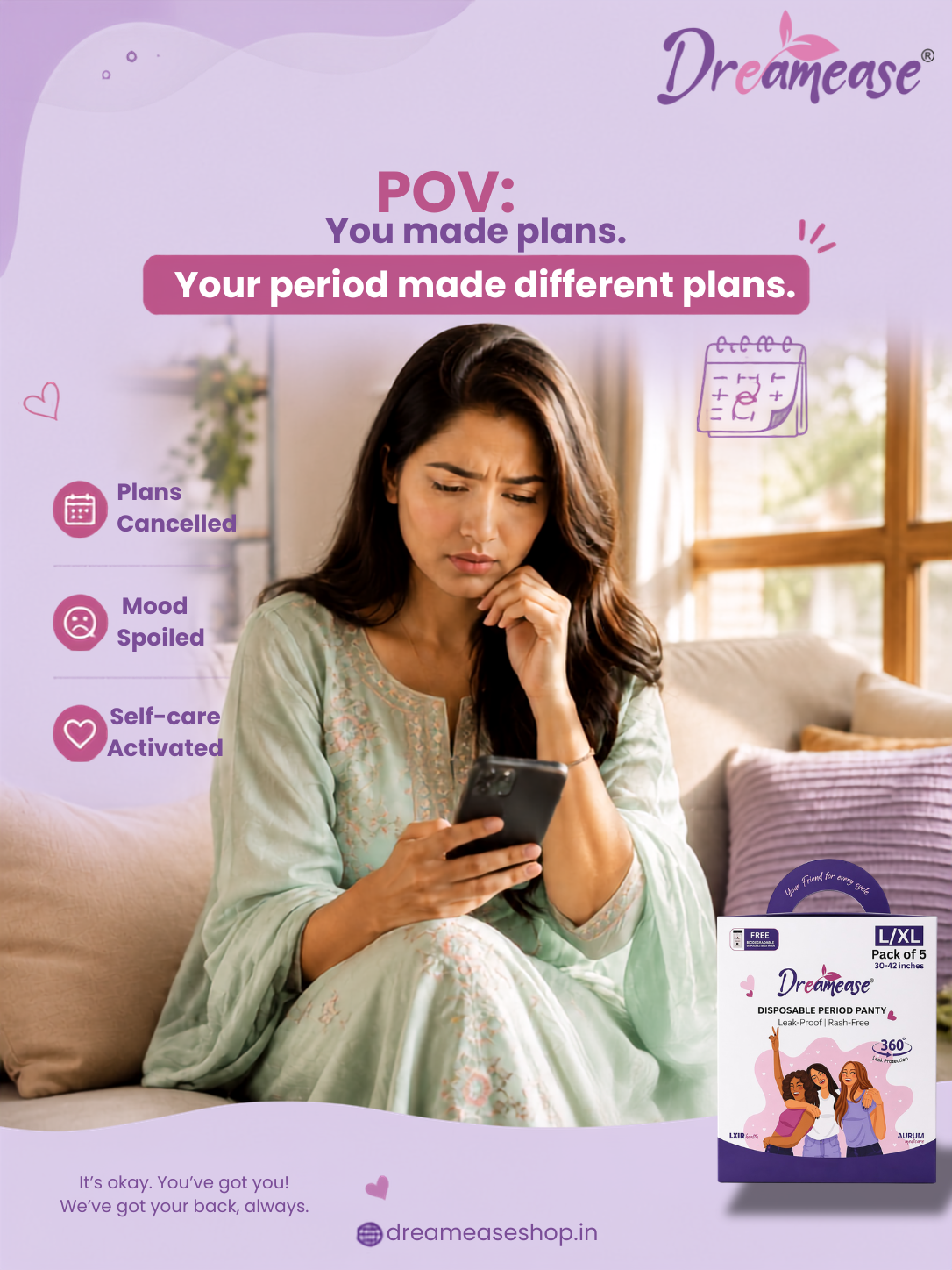
On painful, heavy days, comfort matters. Our disposable period panty gives full coverage and up to 8 hours of protection, so you can rest and look after yourself.
And if you have a question about your periods and don't know who to ask, you can talk to a gynaecologist on Dreamease for just ₹49.
This article is for general information. It doesn't replace advice from your own doctor.