Women's Wellness
Perimenopause: Symptoms, Stages, Age & How to Manage It Naturally
Perimenopause is the transition phase before menopause, often starting in your 40s. Learn the symptoms, stages, age range, and proven ways to manage it.
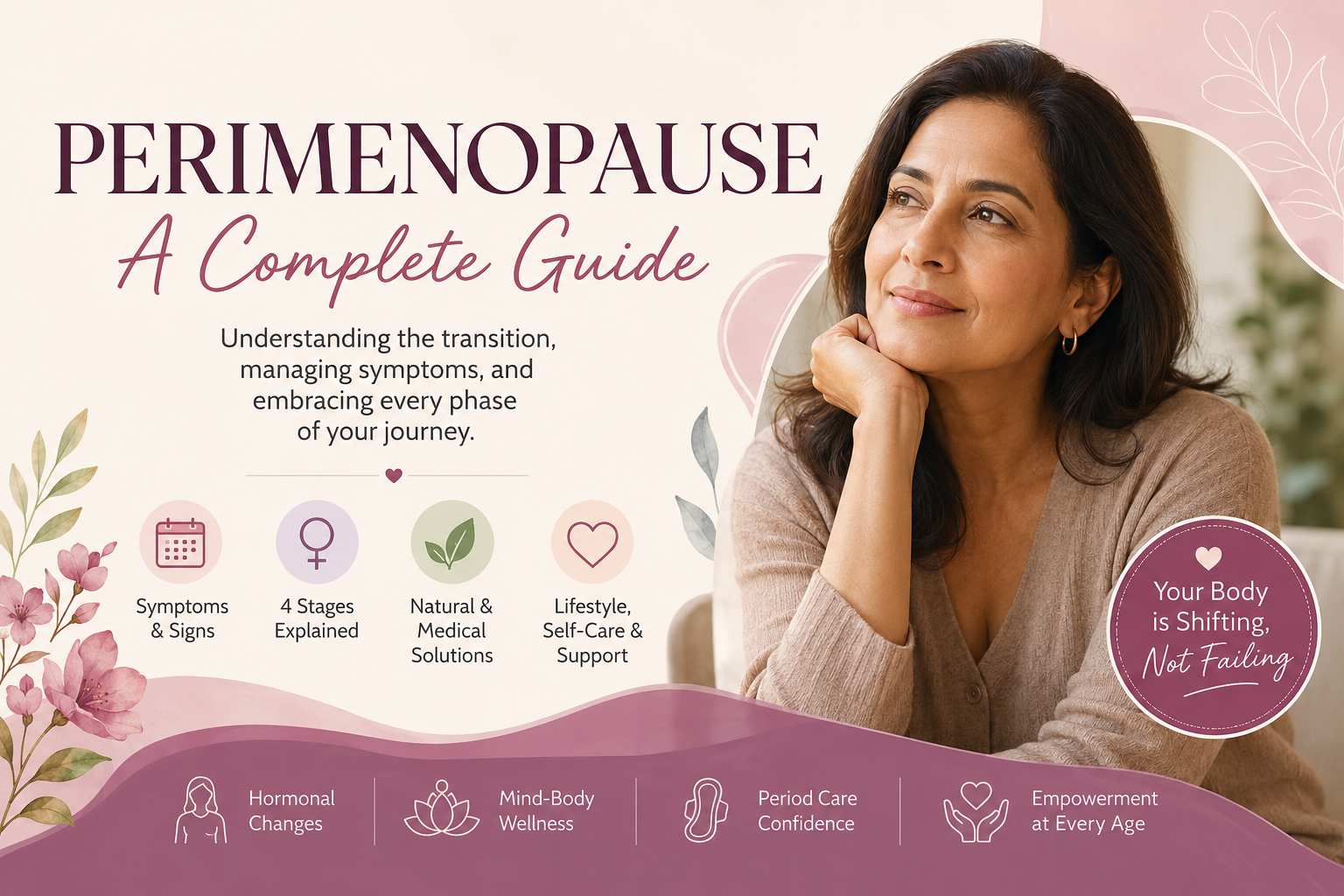
What Is Perimenopause?
Perimenopause — literally meaning "around menopause" — is the natural transition phase your body goes through in the years leading up to menopause. During this time, your ovaries gradually produce less estrogen, your menstrual cycles become irregular, and you may experience a range of physical and emotional changes.
Perimenopause is not menopause itself. Menopause is officially diagnosed only after you have gone 12 consecutive months without a period. Everything before that final period is perimenopause.
This phase typically lasts 4 to 10 years, though for some women it can be shorter or longer.
At What Age Does Perimenopause Start?
Most women begin perimenopause in their mid-40s, though it can start anywhere between 35 and 50 years of age.
Average age of onset: 40–44 years
Average duration: 4–8 years
Average age of menopause in India: 46–48 years (slightly earlier than the global average of 51)
Early perimenopause (before age 40) is called premature perimenopause and may be linked to genetics, autoimmune conditions, surgery, chemotherapy, or smoking.
The 4 Stages of Perimenopause
🌱 Stage 1 — Very Early Perimenopause
Age range: Mid-to-late 30s to early 40s
What happens: Cycles still regular but subtle hormonal shifts begin
Common signs: Slightly heavier or shorter periods, mild PMS changes, occasional sleep disturbances
🌿 Stage 2 — Early Perimenopause
Age range: Early to mid-40s
What happens: Cycle length starts to vary by 7+ days from your normal
Common signs: Irregular periods, mood swings, breast tenderness, occasional hot flashes
🍂 Stage 3 — Late Perimenopause
Age range: Mid to late 40s
What happens: Gaps between periods stretch to 60+ days; estrogen drops sharply
Common signs: Frequent hot flashes, night sweats, vaginal dryness, sleep problems, anxiety
❄️ Stage 4 — Menopause Transition
Age range: Late 40s to early 50s
What happens: Final menstrual period occurs; 12 months later, menopause is confirmed
Common signs: Symptoms often peak in this phase before gradually easing
Common Perimenopause Symptoms
Perimenopause symptoms vary widely from woman to woman. Some experience only mild changes; others face significant disruption. The most common symptoms include:
Menstrual Changes
Irregular periods (shorter, longer, heavier, or lighter)
Skipped periods
Heavier bleeding or large clots
Spotting between periods
Shorter cycles (every 2–3 weeks) or longer gaps (6+ weeks)
Hot Flashes and Night Sweats
Sudden waves of heat in the face, neck, and chest
Drenching night sweats that disturb sleep
Affects up to 80% of perimenopausal women
Mood and Emotional Changes
Anxiety and irritability
Low mood or depression
Brain fog and forgetfulness
Reduced motivation or "blah" feeling
Tearfulness without obvious cause
Sleep Problems
Difficulty falling asleep
Waking up at 3–4 am unable to return to sleep
Night sweats disrupting rest
Vaginal and Urinary Symptoms
Vaginal dryness
Painful intercourse
Reduced libido
Frequent urinary tract infections (UTIs)
Urinary urgency or leakage
Physical Changes
Weight gain, especially around the abdomen
Hair thinning or hair loss
Dry skin and brittle nails
Joint pain and muscle aches
Headaches or migraines
Heart palpitations
What Causes Perimenopause?
Perimenopause is driven by natural changes in ovarian function. As you age, your ovaries:
Contain fewer eggs
Produce less estrogen and progesterone
Ovulate less consistently
Cause hormone levels to fluctuate wildly — sometimes very high, sometimes very low
These hormonal swings — not just the decline — are what cause most perimenopause symptoms.
How Is Perimenopause Diagnosed?
There is no single test to confirm perimenopause. Diagnosis is usually based on:
Your age (35–50)
Symptom pattern (irregular periods + hot flashes + sleep changes)
Menstrual history
Sometimes blood tests (FSH, estradiol, AMH, thyroid panel) to rule out other conditions
Doctors generally avoid relying only on hormone tests because levels fluctuate so much during perimenopause that a single reading can be misleading.
How to Manage Perimenopause: Natural & Medical Options
🌿 Lifestyle Changes (First Line of Defence)
Eat a balanced diet rich in calcium, magnesium, omega-3s, and phytoestrogens (flax, soy, chickpeas)
Exercise regularly — strength training 2–3x/week protects bones and mood
Cut back on triggers — caffeine, alcohol, spicy food, and sugar worsen hot flashes
Stay hydrated — drink 2–3 litres of water daily
Maintain a healthy weight — extra weight increases hot flash severity
Quit smoking — smokers reach menopause 1–2 years earlier
🧘 Mind-Body Approaches
Yoga and pranayama — proven to reduce hot flashes and improve sleep
Meditation and breathwork
Cognitive Behavioural Therapy (CBT) for mood and sleep
Acupuncture — some evidence for hot flash relief
💊 Medical Treatments
Hormone Replacement Therapy (HRT) — most effective treatment for moderate-severe symptoms
Low-dose birth control pills — regulates cycles and reduces symptoms in early perimenopause
Vaginal estrogen — for dryness and urinary symptoms
SSRIs/SNRIs — non-hormonal option for hot flashes and mood
Gabapentin or clonidine — for hot flashes when HRT isn't suitable
Always consult your gynaecologist before starting any hormonal treatment.
🌸 Supplements That May Help
Calcium + Vitamin D — protects bone density
Magnesium — improves sleep and reduces anxiety
Vitamin B-complex — supports energy and mood
Black cohosh — some evidence for hot flashes
Ashwagandha — helps with stress and sleep
Omega-3 fatty acids — supports mood and heart health
Perimenopause and Period Hygiene
Heavy and unpredictable bleeding is one of the most disruptive symptoms of perimenopause. Many women find themselves caught off-guard by sudden flooding, prolonged periods, or spotting between cycles.
Choosing the right period hygiene products during this phase makes a significant difference:
High-absorbency pads or panties for flooding days
Disposable period panties for nighttime, travel, and unpredictable flow
Comfortable, breathable materials since skin sensitivity often increases
Backup protection during important meetings or events
Dreamease's disposable period panties are designed for exactly these unpredictable, heavy-flow days — providing leak-proof confidence when your cycle is least predictable.
When to See a Doctor
Consult your gynaecologist if you experience:
Bleeding between periods that's heavy or persistent
Periods lasting longer than 7 days
Cycles shorter than 21 days
Soaking through a pad every hour for several hours
Severe mood changes affecting daily life
Pain during sex that doesn't improve
Any bleeding after 12 months without a period (post-menopausal bleeding always needs evaluation)
Perimenopause vs Menopause vs Postmenopause
Perimenopause — transition phase with irregular periods and symptoms; lasts 4–10 years
Menopause — single point in time, 12 months after your last period
Postmenopause — all the years after menopause
Conclusion: Perimenopause Is a Transition, Not an Ending
Perimenopause is a natural, universal phase of every woman's life — not a disease. While symptoms can feel overwhelming, understanding what's happening in your body is the first step to managing it confidently.
With the right lifestyle changes, medical support when needed, and reliable period care products designed for unpredictable cycles, perimenopause can be navigated with grace and strength.
Your body is shifting — not failing. This phase, like every phase before it, has its own rhythm. Listen to it, support it, and don't hesitate to seek help when you need it.
Questions readers ask
At what age does perimenopause start?
Perimenopause typically begins in the mid-40s but can start anywhere between 35 and 50 years of age. In India, the average age of onset is 40–44 years.
How long does perimenopause last?
Perimenopause lasts an average of 4 to 8 years, though it can range from as short as 2 years to as long as 10 years for some women.
What are the first signs of perimenopause?
The earliest signs are usually changes in your menstrual cycle — shorter or longer cycles, heavier or lighter periods, occasional skipped periods, plus mild mood changes and sleep disturbances.
Can I still get pregnant during perimenopause?
Yes. Even with irregular periods, ovulation can still occur during perimenopause. Use contraception if you wish to avoid pregnancy until you've gone 12 months without a period.
What is the difference between perimenopause and menopause?
Perimenopause is the transition phase with irregular periods and symptoms. Menopause is the single point in time when you've gone 12 consecutive months without a period.
Is weight gain normal during perimenopause?
Yes. Hormonal changes, slower metabolism, and shifting body composition often cause weight gain — especially around the abdomen — during perimenopause. Strength training and a protein-rich diet help manage it.
How can I manage perimenopause naturally?
Lifestyle changes are highly effective — regular exercise (especially strength training), a balanced diet rich in calcium and phytoestrogens, stress reduction through yoga or meditation, good sleep hygiene, and avoiding triggers like caffeine and alcohol.
When should I see a doctor about perimenopause?
See a gynaecologist if you have very heavy bleeding, periods lasting more than 7 days, bleeding between periods, severe mood changes affecting daily life, or any bleeding after 12 months without a period.