Women's Wellness
Not All Bleeding Is a Period: Understanding Postpartum Flow
Postpartum bleeding is heavier, longer, and clinically different from a period. Here’s what your body is actually going through, and why routine products often fail.
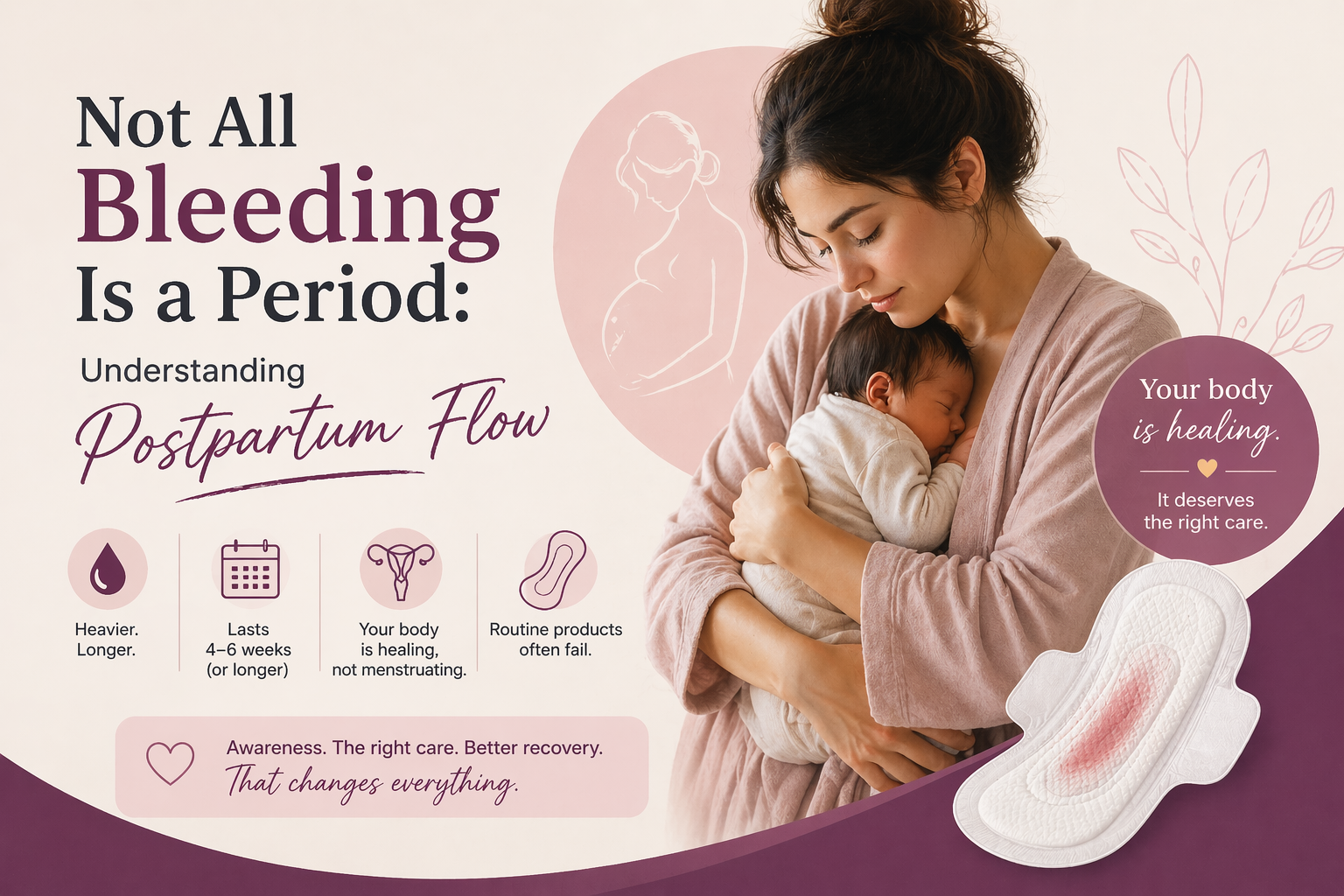
After delivery, your body begins a natural healing process. The uterus sheds the lining that supported your pregnancy—this discharge is called lochia.
Unlike a menstrual cycle, this isn’t hormonal shedding. It’s physical recovery.
Postpartum bleeding:
Begins immediately after childbirth
Can last 4 to 6 weeks (or longer)
Changes in color, flow, and consistency over time
Often includes blood clots and tissue
This is your body healing from a wound roughly the size of a dinner plate inside your uterus.
The Three Stages of Postpartum Flow
Postpartum bleeding isn’t consistent—it evolves.
1. Lochia Rubra (Days 1–4)
Heavy, bright red bleeding with clots. This is the most intense phase—far heavier than a typical period.
2. Lochia Serosa (Days 5–10)
Flow becomes lighter, pinkish or brown. Clots reduce, but discharge continues steadily.
3. Lochia Alba (Up to 6 weeks)
Yellowish or white discharge. At this stage, it’s less about bleeding and more about healing.
Why Period Products Don’t Work
Most women instinctively reach for sanitary pads or period underwear. But postpartum bleeding is fundamentally different—and standard products often fall short.
Here’s why:
Volume overload: Postpartum flow can exceed the absorbency of regular pads
Duration mismatch: Period products are designed for 4–6 days, not 4–6 weeks
Coverage gaps: Leaks are more likely due to inconsistent flow and clotting
Skin sensitivity: Healing tissues require softer, more breathable materials
Using the wrong product doesn’t just mean discomfort—it can affect hygiene, recovery, and confidence.
What Your Body Actually Needs
Postpartum care should be approached clinically, not cosmetically.
Look for solutions that provide:
High absorbency for heavy flow days
Full coverage (front to back protection)
Leak-lock technology to manage sudden gushes
Soft, breathable fabric for sensitive skin
Secure fit without pressure on healing areas
This is not about convenience—it’s about recovery.
The Emotional Side No One Talks About
Postpartum bleeding isn’t just physical. It can be overwhelming.
The unpredictability can create anxiety
The heaviness can feel alarming
The duration can feel never-ending
When products fail, it adds another layer of stress during an already vulnerable time.
Women deserve better than “adjust and manage.” They deserve solutions designed specifically for this phase.
Red Flags to Watch For
While postpartum bleeding is normal, certain signs require immediate attention:
Soaking through a pad in under an hour
Large clots (bigger than a golf ball)
Foul-smelling discharge
Fever or chills
Sudden return to heavy bleeding after it had slowed
If you notice any of these, consult your doctor immediately.
Recovery Deserves Respect
Postpartum bleeding is not a minor inconvenience, it’s a critical part of healing. Treating it like a period underestimates what your body has just gone through.
The right awareness leads to the right care.
The right care leads to better recovery.
And better recovery? That changes everything.