Women's Wellness
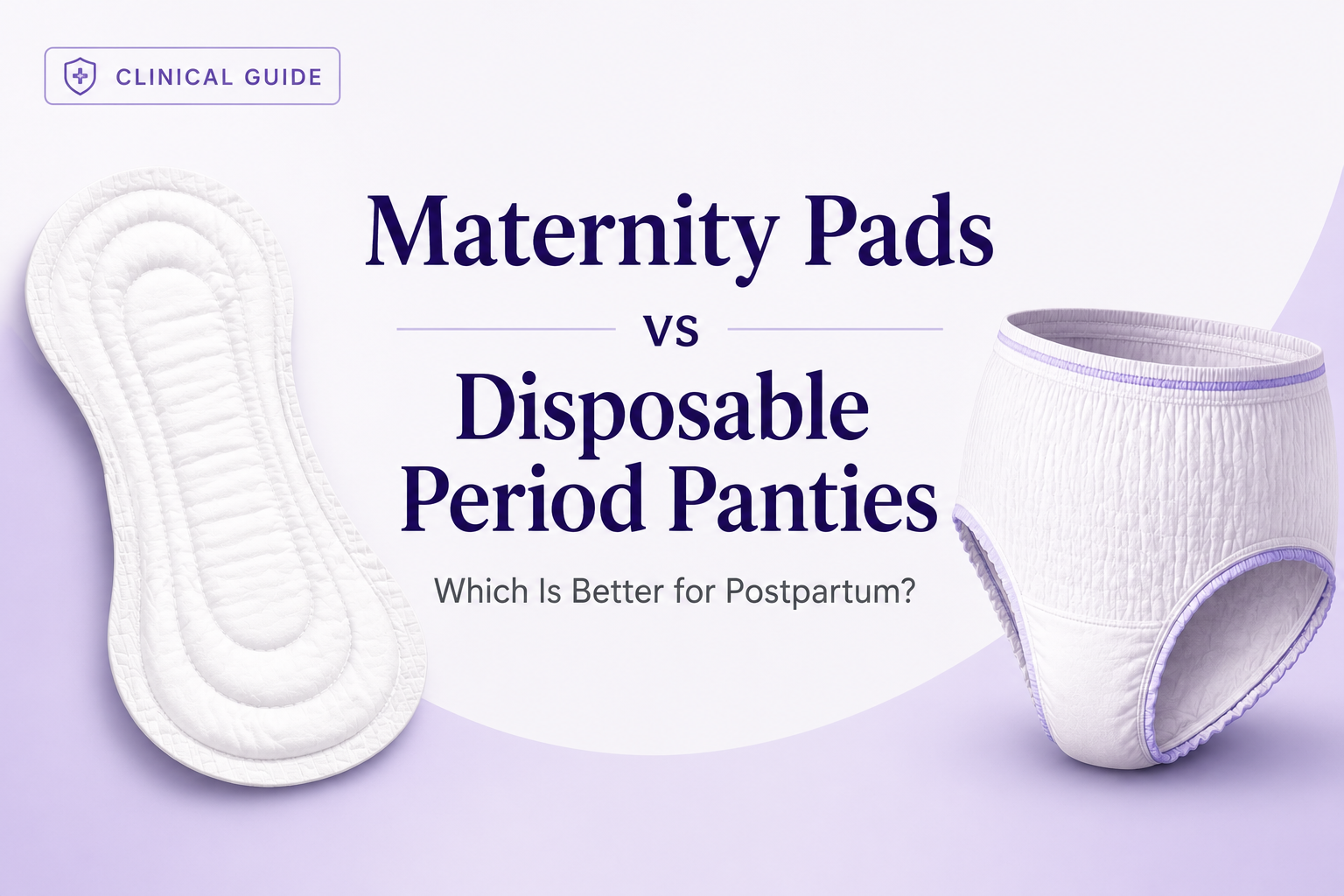
Maternity Pads vs Disposable Period Panties: Which Is Better for Postpartum?
Confused between maternity pads and disposable period panties for postpartum recovery? Here's an honest comparison of leak protection, comfort, cost, and when to use each.
Ask any new mother what surprised her most about postpartum recovery, and heavy bleeding is usually near the top of the list. Lochia can last 4–6 weeks, and in the first week it's often heavier than any period you've had. The two most common products Indian mothers reach for are maternity pads and disposable period panties — but they work very differently, and most hospital bag lists don't explain which one you actually need, or when.
This guide compares both honestly, because the answer isn't "one or the other." It's knowing which product suits which stage of your recovery.
What Are Maternity Pads?
Maternity pads are extra-long, extra-thick sanitary pads designed for postpartum flow. They're wider than regular pads, softer on stitches, and usually free of the plastic top layer found in ultra-thin period pads.
Where they work well:
Light to moderate flow in weeks 2–6
Daytime use when you can change frequently
Low cost per piece
Where they struggle:
Movement: Pads shift when you sit up, feed at odd angles, or roll over in bed — exactly what new mothers do all night.
Side and back leaks: Postpartum flow pools when you lie down. A pad only covers the centre.
Stitches and C-section comfort: The adhesive and bunching can irritate sensitive skin.
Night anxiety: Many mothers stack two pads or add a towel underneath — a sign the product isn't doing its job.
What Are Disposable Period Panties?
Disposable period panties are single-use absorbent underwear — the pad and the panty are one piece. The absorbent core runs from the front waistband to the back, with 360° coverage and elastic that holds everything in place no matter how you move.
Where they work well:
Heavy flow days (days 1–10): Full coverage means no side, back, or overflow leaks.
Nights: You can sleep on your side or back without waking up to check for stains.
C-section recovery: Soft, high-waisted designs sit above the incision without pressure.
Hospital stay: No fiddling with adhesives while you're exhausted; wear, remove, discard.
Hygiene: One-piece disposal, no washing blood-soaked underwear.
Where they cost more:
Higher price per piece than a pad — though you typically use fewer per day because of the higher absorbency.
The Honest Comparison
Leak Protection
Winner: Disposable period panties. A pad protects a strip; a panty protects the entire underwear area. For lochia, which flows heavier when you stand up after lying down, this difference is significant.
Comfort on Stitches
Winner: Disposable period panties. No adhesive, no bunching, no plastic edges. The soft waistband also avoids the C-section incision line.
Night Use
Winner: Disposable period panties. Side-sleeping and feeding positions defeat even XL pads. This is the single most common reason mothers switch.
Cost Per Day
Winner: Maternity pads — on paper. In practice, mothers using pads on heavy days often change 6–8 times and still deal with stained clothes and sheets. Factor in fewer changes and zero laundry accidents, and panties on heavy days are closer in real cost than the per-piece price suggests.
Light Flow (Weeks 3–6)
Winner: Maternity pads. Once flow reduces to spotting, a full absorbent panty is more than you need.
So Which Should You Buy?
Most mothers do best with both, used in stages:
Days 1–10 (heavy flow): Disposable period panties, day and night. This is when leaks, night changes, and stitch discomfort peak.
Weeks 2–4 (moderate flow): Panties at night, maternity pads during the day if you prefer.
Weeks 4–6 (light flow/spotting): Regular or maternity pads are enough.
Practical hospital bag rule: pack 10–12 disposable period panties for the first week, and one pack of maternity pads for the transition weeks after.
What to Look For in Disposable Period Panties
High-absorbency core (look for coverage claims for heavy postpartum flow, not just periods)
Soft, breathable, cotton-feel fabric — you'll wear them 24×7 initially
High waist that clears a C-section incision
Size range that accounts for the postpartum belly (size up from pre-pregnancy)
Individually packed pieces for hospital hygiene
The Bottom Line
Maternity pads and disposable period panties aren't competitors — they're for different stages. Panties handle the heavy, unpredictable first days when leak protection and comfort matter most; pads handle the lighter tail end. If your budget forces a choice, prioritise panties for the first 7–10 days, because that's when product failure costs you the most sleep, laundry, and stress.
This article is for general information and is not a substitute for medical advice. If your bleeding soaks through a high-absorbency product within an hour, or you pass large clots, contact your doctor immediately.
Questions readers ask
Can I use disposable period panties immediately after a C-section?
Yes. Choose a high-waisted style that sits above the incision line. Many mothers find them more comfortable than pads because there's no adhesive or bunching near sensitive skin.
How many disposable period panties do I need for postpartum?
Plan for 3–4 per day in the first week, then 1–2 (mainly nights) in week two — roughly 25–30 pieces covers most recoveries.
Are maternity pads and disposable period panties the same as adult diapers?
No. Adult diapers are designed for urinary incontinence. Period panties are designed for menstrual and postpartum blood flow, with underwear-like fit and fabric.
When should I switch from panties to pads?
Once your lochia turns pink-brown and reduces to a moderate flow — usually around week two — you can switch to maternity pads during the day and keep panties for nights.