Women's Wellness
Lochia Colours After Birth: Red, Pink, Brown & White Stages Explained
Lochia is the normal vaginal discharge after childbirth. Learn what each lochia colour means - red, pink, brown, yellow, and white -and when it signals a problem.
What Is Lochia?
Lochia is the vaginal discharge that every woman experiences after childbirth, whether the delivery was vaginal or caesarean. It is made up of blood, mucus, uterine tissue, and remnants from the placental site as the uterus heals and returns to its pre-pregnancy size.
Lochia is completely normal and typically lasts four to six weeks postpartum. The key thing every new mother should know is that lochia changes colour as healing progresses - and tracking those colour changes is one of the simplest ways to monitor your postpartum recovery.
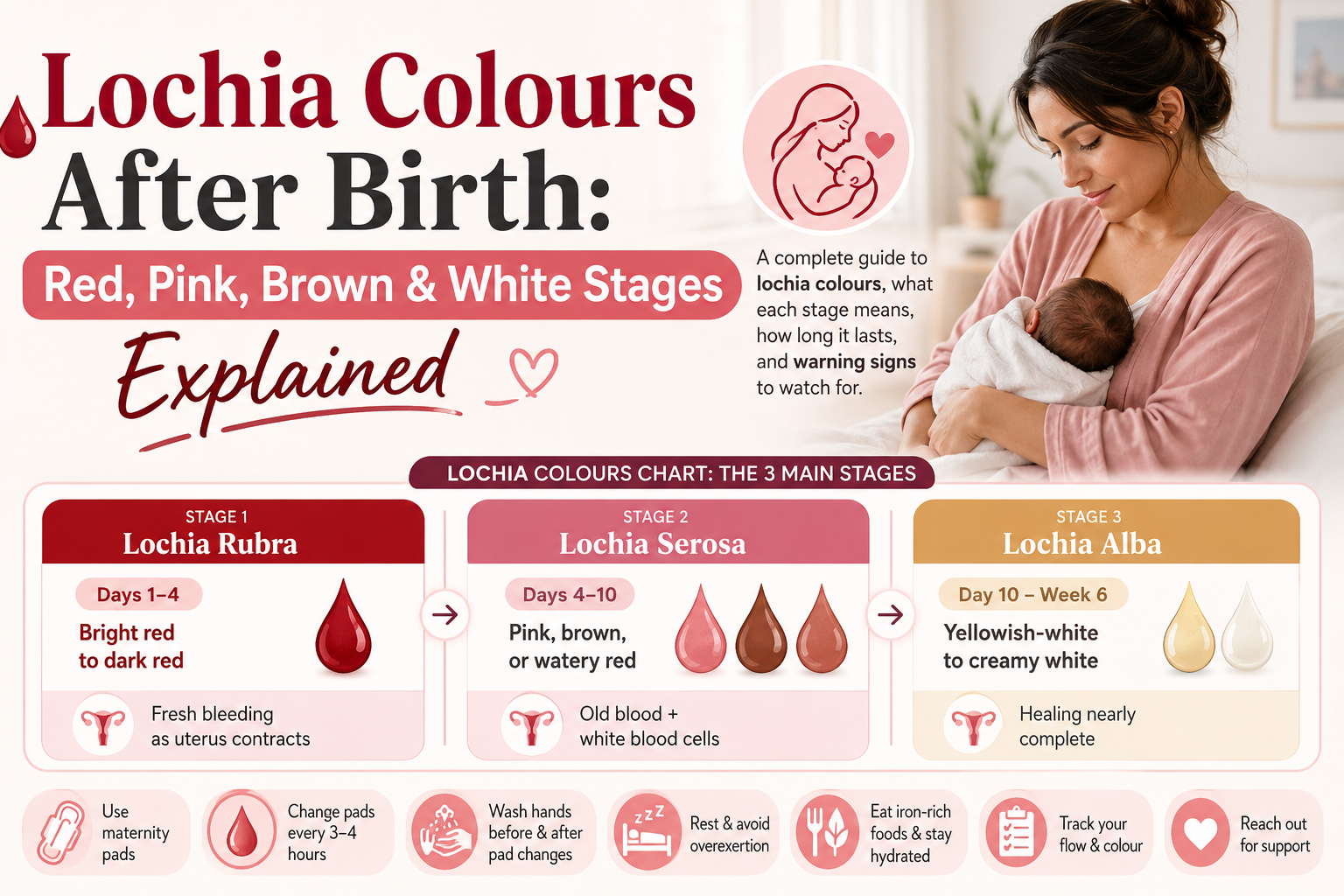
Lochia Colours Chart: The 3 Main Stages
Lochia passes through three main stages, each named in Latin and identified by its colour:
🔴 Stage 1 — Lochia Rubra
Colour: Bright red to dark red
Duration: Days 1–4
What it means: Fresh bleeding as the uterus contracts back to its pre-pregnancy size
🟤 Stage 2 — Lochia Serosa
Colour: Pink, brown, or watery red
Duration: Days 4–10
What it means: Old blood mixed with white blood cells — active bleeding has slowed
⚪ Stage 3 — Lochia Alba
Colour: Yellowish-white to creamy white
Duration: Day 10 to week 6
What it means: Healing is nearly complete
Lochia Rubra: Red Lochia (Days 1–4)
Lochia rubra is the first and heaviest stage of postpartum bleeding. The discharge is bright red to dark red, similar to a heavy menstrual period, and may contain small clots.
What to Expect
Heavy flow for the first 24–48 hours
Small clots (up to the size of a plum)
Mild cramping ("after-pains") as the uterus contracts
Increased flow when standing up or breastfeeding (this is normal — it's pooled blood releasing)
How Much Bleeding Is Normal?
Soaking one maternity pad every 2–4 hours is normal in the first day or two. Soaking more than one pad per hour is not normal and may indicate postpartum hemorrhage — seek emergency care immediately.
Lochia Serosa: Pink and Brown Lochia (Days 4–10)
Around day 4 or 5, lochia transitions to lochia serosa. The colour shifts from bright red to pink, brownish-red, or watery red, signalling that active bleeding has slowed and old blood is being expelled.
What to Expect
Lighter flow than the first few days
Pinkish, rust-coloured, or pale brown discharge
A musty but not foul odour
Continued mild cramping
Why the Colour Changes
Lochia serosa contains less fresh blood and more serum, white blood cells, and cervical mucus. The brown tint is simply oxidised (older) blood — exactly the same change you see at the end of a normal period.
Lochia Alba: White and Yellow Lochia (Day 10 – Week 6)
Lochia alba is the final and longest stage. From around day 10 onwards, the discharge fades to a yellowish-white or creamy white colour.
What to Expect
Light flow, easily managed with a pantyliner
Yellow, off-white, or creamy white discharge
Gradually decreasing volume
Complete stop by around 4–6 weeks postpartum
This stage is mostly white blood cells, cervical mucus, and shed cells from the healing uterine lining — the body's final clean-up phase.
Lochia Colours Timeline at a Glance
Days 1–4: Bright red, heavy (lochia rubra)
Days 4–10: Pink, brown, watery (lochia serosa)
Days 10–42: Yellow, white, creamy (lochia alba)
Some women stop bleeding earlier; others continue light spotting for up to six weeks. Both are normal.
When Lochia Colours Are NOT Normal: Warning Signs
While colour changes are part of healthy recovery, certain signs need urgent medical attention:
🚨 Call Your Doctor Immediately If You Notice:
Bright red bleeding that returns after lochia had turned pink or brown (could indicate retained tissue or overexertion)
Soaking more than one pad per hour
Large clots bigger than a plum, especially after the first few days
Foul-smelling lochia (a rotten or fishy odour suggests infection)
Fever above 38°C (100.4°F) with chills
Severe lower abdominal pain that worsens
Dizziness, fainting, rapid heartbeat, or shortness of breath
Lochia that suddenly stops in the first few days and then returns heavily
Greenish or grey discharge at any stage
These can be signs of postpartum hemorrhage (PPH), endometritis (uterine infection), or retained placenta — all of which need immediate treatment.
Lochia After C-Section vs Vaginal Delivery
Women who deliver by caesarean section still experience lochia, though often slightly lighter and for a slightly shorter duration. The colour stages remain the same — rubra, serosa, alba. C-section mothers should also watch their incision site for signs of infection alongside monitoring lochia.
Lochia and Breastfeeding
Breastfeeding can intensify lochia temporarily. When your baby nurses, your body releases oxytocin, which causes the uterus to contract more strongly. You may notice:
A gush of lochia during or after feeding
Stronger after-pains
A slightly heavier flow on breastfeeding days
This is normal and actually speeds up uterine healing.
Tips to Manage Lochia Comfortably
Use maternity pads, not tampons — tampons increase infection risk in the postpartum period.
Change pads every 3–4 hours to prevent bacterial growth.
Wash hands before and after pad changes.
Rest as much as possible — overexertion can restart heavier bleeding.
Stay hydrated and eat iron-rich foods to replenish blood loss.
Track your flow and colour — note any sudden changes.
Wear breathable cotton underwear to reduce irritation.
Avoid baths, swimming, and intercourse until your doctor clears you (usually after 6 weeks).
When Does Lochia Stop?
For most women, lochia stops completely between 4 and 6 weeks postpartum. Light spotting up to 8 weeks is still considered within normal range for some women. After lochia ends, your first postpartum period typically returns:
6–8 weeks if you're not breastfeeding
3–6 months or longer if you're exclusively breastfeeding
Conclusion: Tracking Lochia Colours Helps You Heal Safely
Understanding lochia colours — red, pink, brown, yellow, and white — gives every new mother a simple, powerful tool to track postpartum recovery. The shift from bright red to creamy white is a sign your body is healing exactly as it should.
But never ignore warning signs. Returning red blood, foul odour, large clots, or fever are not part of normal healing and need prompt medical care.
Your body has just done something extraordinary. Be gentle with it, rest deeply, and reach out for support — physical and emotional — whenever you need it.
Questions readers ask
What are the stages of lochia?
Lochia has three stages: lochia rubra (bright red, days 1–4), lochia serosa (pink or brown, days 4–10), and lochia alba (yellowish-white, day 10 to week 6).
How long does lochia last after birth?
Lochia typically lasts 4 to 6 weeks after childbirth, though some women experience light spotting for up to 8 weeks. It occurs after both vaginal and caesarean deliveries.
Is brown lochia normal?
Yes. Brown lochia (lochia serosa) is normal between days 4 and 10 postpartum. It contains old, oxidised blood and indicates that active bleeding has slowed and healing is progressing.
When should I worry about lochia colour?
Worry if bright red bleeding returns after lochia turned pink or brown, if you soak more than one pad per hour, pass large clots, notice foul odour, develop fever, or feel dizzy. These can indicate postpartum hemorrhage or infection.
Does lochia smell bad?
Lochia has a mild, musty smell similar to menstrual blood — this is normal. A foul, rotten, or fishy odour is not normal and may indicate a uterine infection (endometritis). See a doctor immediately.
Can I use tampons for lochia?
No. Tampons should not be used during the postpartum period because they significantly increase the risk of infection. Use maternity pads or postpartum-specific absorbent products instead.
Why did my lochia turn red again after going brown?
Bright red lochia returning after it had lightened is often a sign of overexertion. Rest more. However, if it's heavy or persistent, it can indicate retained placental tissue or a uterine issue - contact your doctor.
Is lochia heavier when breastfeeding?
Yes, temporarily. Breastfeeding releases oxytocin, which causes the uterus to contract and may produce a gush of lochia or stronger after-pains. This actually helps the uterus heal faster.