Women's Wellness
How to Talk to Your Daughter About Her First Period (Without Awkwardness)
Most of us learned about periods through whispers and confusion. Here is a simple, warm guide to talking to your daughter about her first period: when, what to say and what to pack.
Do you remember how you found out about periods?
For many of us, it was a whisper from a friend, a confusing talk at school, or a shocked moment in the bathroom, with no idea what was happening. Someone handed us a pad and said, "Don't tell anyone."
Now you are the parent, and your daughter is growing up. You want her to feel different from how you did. But how do you start?
Here is a simple guide.
When should you start talking?
Earlier than you think. Most girls get their first period between the ages of 10 and 15, and some a little sooner or later. Many parents start gentle conversations around age 8 to 10, before the changes begin. It is much better for her to hear it from you first than from a classmate.
You don't need one big "talk". Several short, relaxed chats work better.
How to start the conversation
Pick a calm moment, like during a walk, a car ride or while cooking together. Avoid a serious, sit-down setting that makes it feel scary.
Begin with a simple line, like "Your body will start changing soon, and I want you to know what to expect."
Ask what she already knows. You may be surprised, and you can gently correct any myths.
Keep your tone warm and normal, as if you were talking about eating or sleeping.
What to explain
1. What a period is. Every month, the body prepares the womb for a possible pregnancy. If there is no pregnancy, the lining is shed as blood. It is natural and healthy.
2. How long it lasts. Periods usually last around three to seven days, and the first few can be irregular. That is normal in the beginning.
3. How much blood. It often looks like more than it is. Explain that it is a few tablespoons over the whole period, so she doesn't panic.
4. What to use. Show her pads, and explain how to use and change them. You can also mention other options when she is older, and let her choose what feels comfortable.
5. How to stay clean. Change every four to six hours, wash hands, bathe daily, wrap used products in paper and put them in a dustbin, and never flush them.
6. Cramps and mood. Some girls feel cramps, tiredness or a bad mood. Warmth, rest, water and light movement can help, and a doctor can advise if the pain is strong.
7. That she can ask anything. Make it clear there are no silly questions.
Break the shame and the myths
Many of us grew up with rules like "don't touch the pickle" or "don't enter the kitchen". Tell her clearly that a period does not make her dirty, and she can eat normally, bathe, play and study. If your family follows traditions, you can explain that you will talk about those separately, but that medically a period is normal and nothing to hide.
Don't forget the boys
Boys need to know about periods too. A brother or father who understands it can be a real support. A short, simple explanation can stop teasing and build kindness.
Build a first period kit
Prepare a small pouch for her school bag, so she is never caught off guard.
2 or 3 pads or period panties she is comfortable with
A spare pair of underwear
A small pack of wipes or tissue
A few small paper or plastic bags for used items
A small dark cloth or jacket she can tie around her waist
A note with your phone number
Show her where you keep extra supplies at home, so she can take them without asking.
What to do on the day
Stay calm and warm. Say, "This is normal. I'm proud of you. Let's get you comfortable." Help her with the first change, make her a warm drink, and let her rest if she wants. Don't turn it into a big announcement or make a joke about it in front of others, unless she wants to share the news.
Keep talking
Keep checking in after her first period. Ask how it felt, and whether she has questions. Show her how to track her dates in a notebook or app. Over time, you can talk about cramps, hygiene, mood changes and healthy habits.
When to see a doctor
Please book an appointment if your daughter:
Has not started her periods by age 15, or by 3 years after breast development began
Has very heavy bleeding, soaking a pad every one to two hours
Has periods that last more than seven days
Has severe pain that stops her going to school or doing normal things
Bleeds between periods, or her periods suddenly stop after being regular
Feels dizzy, very tired or looks pale
If you're not sure, ask. A doctor would much rather hear from you early.
If you didn't have this talk yourself
Many mothers worry they will do it badly because nobody did it for them. It's okay. You don't need perfect words. Being open and kind is enough. You can even say, "Nobody told me this when I was your age, and I want it to be different for you."
Where Dreamease can help
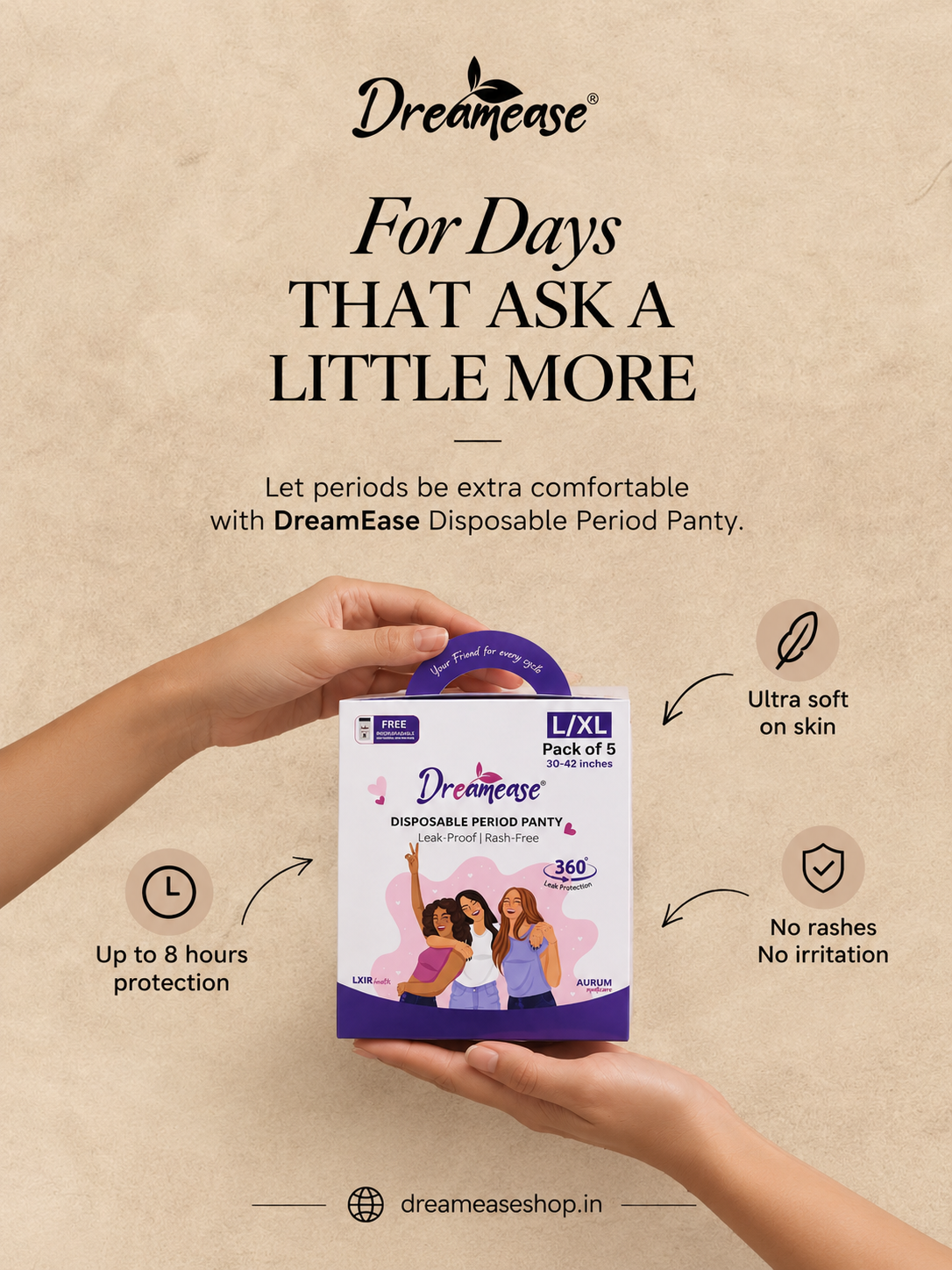
At Dreamease, we believe every girl and woman should feel comfortable and informed about her period. Our disposable period panty gives full coverage and up to 8 hours of protection, for days when you need extra confidence.
And if you have a question about periods or your health and don't know who to ask, you can talk to a gynaecologist on Dreamease for just ₹49.
This article is for general information. It doesn't replace advice from your own doctor.