Women's Wellness
How to Sleep Comfortably During Postpartum Bleeding | Dreamease
Learn practical ways to sleep more comfortably during postpartum bleeding. Understand nighttime leaks, recovery positioning, and why full-coverage protection matters after childbirth.
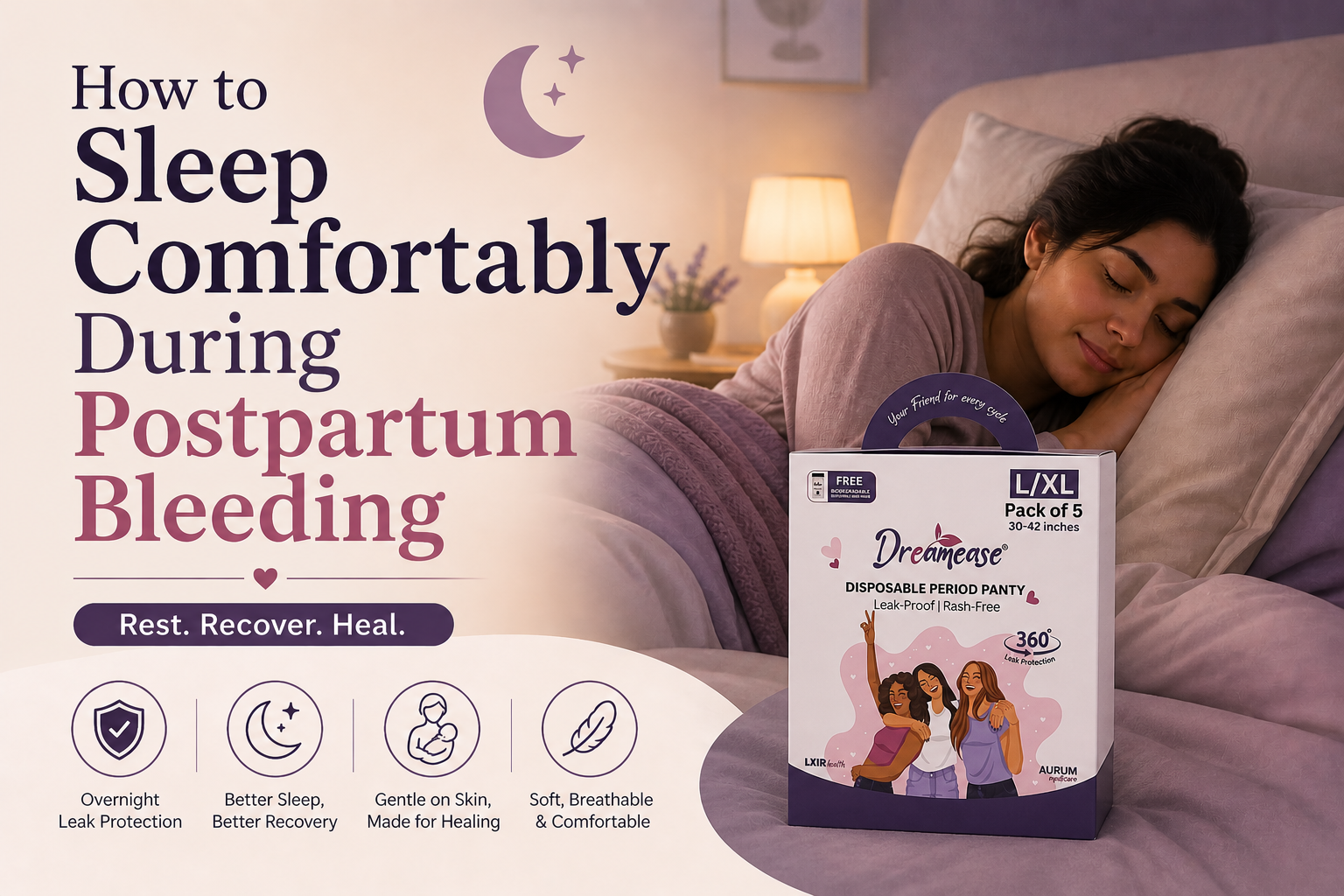
Sleep after childbirth is already difficult.
But for many women, postpartum bleeding makes nights even more uncomfortable.
Frequent leaks, pad shifting, dampness, discomfort while moving, and repeated nighttime changes can interrupt recovery when rest is needed most.
The reality is simple:
Postpartum bleeding is heavier, longer, and less predictable than a regular period.
And nighttime is often when traditional pads fail the most.
Why Postpartum Bleeding Feels Worse at Night
During postpartum recovery, the body continues shedding blood, tissue, and mucus through lochia.
When lying down for long periods:
Flow distribution changes
Blood may pool and release suddenly when moving
Pads can shift during sleep
Side leakage becomes more common
Moisture buildup increases discomfort
For women recovering from vaginal delivery or C-section surgery, even small sleep disruptions can feel physically exhausting.
Why Sleep Matters During Postpartum Recovery
Recovery does not happen only during the day.
The body heals significantly during rest.
Poor sleep during postpartum recovery may increase:
Physical fatigue
Irritation and stress
Recovery discomfort
Difficulty managing daily movement
Emotional exhaustion
That is why nighttime protection is not just about hygiene.
It is part of recovery support.
Common Problems Women Face While Sleeping Postpartum
1. Overnight Leaks
Heavy postpartum flow can exceed the capacity of regular pads, especially during the first weeks after childbirth.
2. Constant Repositioning
Pads may bunch, move sideways, or lose alignment while sleeping.
3. Anxiety About Staining
Many women sleep lightly because they worry about leaking onto bedsheets or clothes.
4. Discomfort During Movement
Getting up repeatedly to change pads can become painful, especially after stitches or surgical recovery.
5. Interrupted Rest
Frequent waking reduces already limited postpartum sleep quality.
Tips to Sleep More Comfortably During Postpartum Bleeding
Choose Full-Coverage Protection
Products designed for recovery provide better stability than narrow pads alone.
Full-coverage disposable recovery panties help reduce:
Side leaks
Movement-related shifting
Overnight staining
Frequent adjustments
The goal is uninterrupted protection during sleep.
Wear Comfortable, Breathable Clothing
Soft, loose-fitting sleepwear reduces friction and irritation during healing.
Avoid:
Tight waistbands
Rough fabrics
Restrictive clothing around the abdomen or pelvic area
Comfort supports recovery.
Keep Essentials Nearby
Place recovery supplies close to the bed:
Extra protection
Wipes
Water bottle
Pain relief support if recommended medically
Reducing unnecessary movement during the night can help conserve energy.
Use Supportive Sleeping Positions
Many women feel more comfortable:
Sleeping slightly reclined
Using pillows for lower back or abdominal support
Sleeping on the side with leg support pillows
Comfortable positioning can reduce pressure and improve sleep quality.
Change Protection Before Sleeping
Using fresh protection before bedtime helps reduce overnight discomfort and leakage risk.
Nighttime flow is often less predictable than daytime flow.
Preparing before sleep helps reduce interruptions later.
Why Regular Pads Often Fail Overnight
Pads were designed primarily for routine menstrual flow.
Postpartum bleeding is different.
Recovery flow may:
Last longer overnight
Spread differently while lying down
Increase leakage during movement
Require wider absorbency coverage
This is why many women experience leaks even while using large overnight pads.
Built for Real Recovery Flow
Dreamease Disposable Period Panties are designed for situations where standard pads are often insufficient.
They provide:
360° leak protection
Full-coverage absorbency
Secure overnight fit
Soft disposable comfort
Protection during postpartum recovery and heavy flow nights
Because postpartum bleeding is not routine flow.
It is recovery.
When to Speak to a Doctor
Some postpartum bleeding symptoms require medical attention.
Seek medical guidance if you experience:
Extremely heavy bleeding soaking protection rapidly
Large blood clots
Fever
Severe pain
Dizziness or fainting
Foul-smelling discharge
Not all postpartum bleeding patterns are normal.
Final Thoughts
The first weeks after childbirth are physically demanding.
Comfortable sleep may feel difficult, but the right recovery support can reduce leaks, discomfort, and interruptions during the night.
Postpartum bleeding is not just a heavier period.
It is part of the body’s healing process.
And recovery deserves protection designed for real flow.
FAQs
Is it normal to leak at night during postpartum bleeding?
Yes. Overnight leaks are very common during postpartum recovery because flow can be heavier and pads may shift during sleep.
How long does heavy postpartum bleeding last?
The heaviest postpartum bleeding is usually during the first few days after childbirth, although lochia may continue for several weeks.
Can I wear disposable period panties after childbirth?
Yes. Many women use disposable period panties during postpartum recovery for fuller coverage and overnight protection.
Why do postpartum pads leak while sleeping?
Flow distribution changes while lying down, and pads may move or fail to provide enough side coverage during sleep.
What helps improve postpartum sleep comfort?
Comfortable clothing, supportive positioning, and full-coverage leak protection can help improve rest during postpartum recovery.