Women's Wellness
Hospital Bag Checklist for Delivery in India (2026) — What You Actually Need
The real hospital bag checklist for Indian moms, what to actually pack for labour, postpartum recovery and your newborn. No fluff, no 60-item lists.
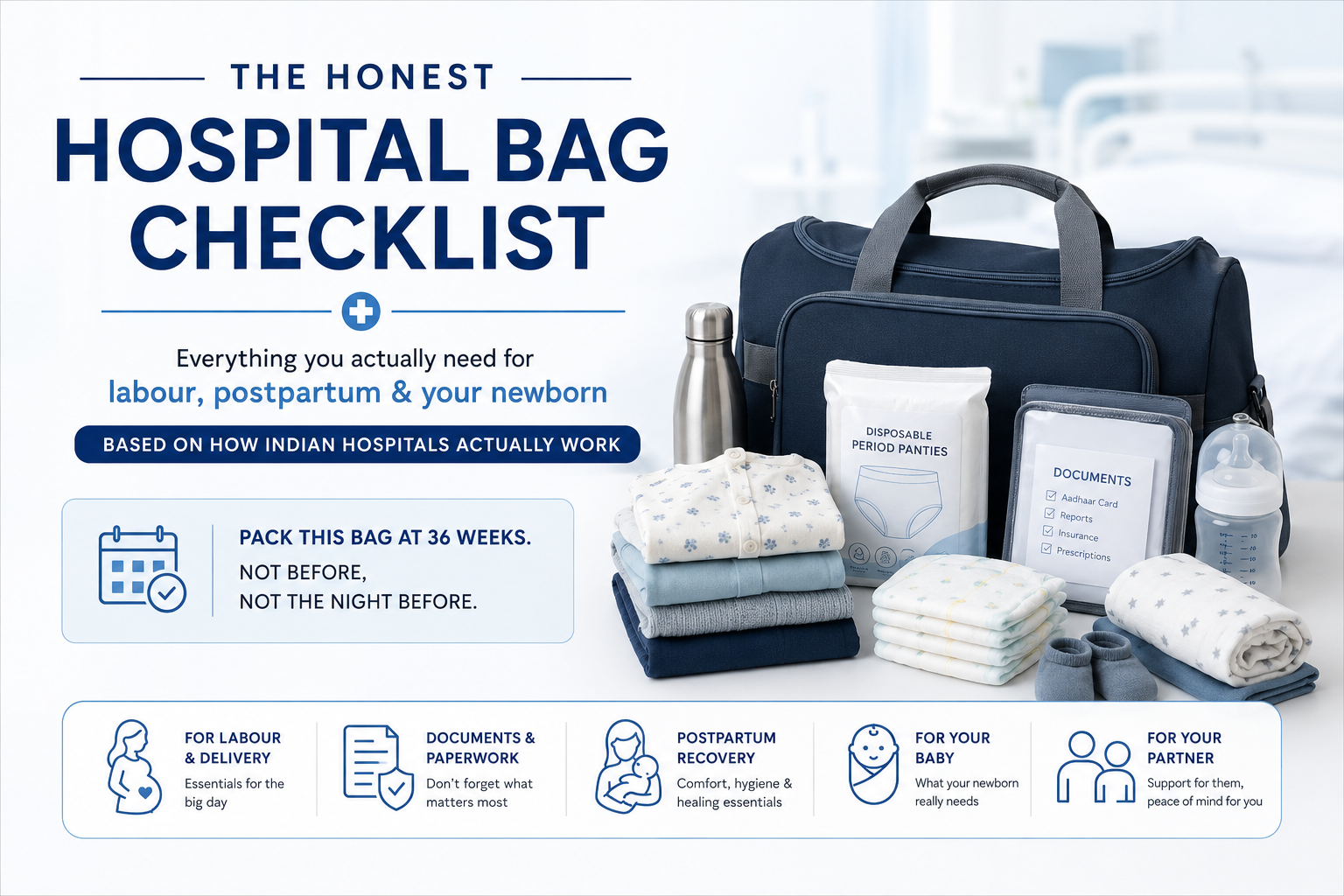
Most hospital bag lists online are padded with 60+ items you will never use. This one is honest. It covers what you genuinely need for labour, postpartum recovery, and your newborn, based on how Indian hospitals actually work.
Pack this bag at 36 weeks. Not before, not the night before your due date.
What to pack for labour and delivery
These are for the active labour phase. Keep them accessible at the top of your bag.
Comfortable cotton nightgown or loose kurta - something that opens from the front for skin-to-skin contact and feeding
Non-slip socks or slippers - hospital floors are cold and you will be walking
Hair ties or clips - at least three
Phone charger and a power bank - your phone battery will not survive labour
Light snack for your support person - hospitals rarely feed them
Earphones - for music, breathing exercises, or simply blocking out noise
Lip balm - breathing through contractions dries your lips
Documents and paperwork - do not forget these
Indian hospitals are documentation-heavy. Pack these in a separate zip pouch.
Aadhaar card (both parents)
Pregnancy file with all reports (blood tests, ultrasound scans, anomaly scan, GBS test)
Health insurance card and TPA letter if applicable
Doctor's contact number saved and written on paper - phones die
Previous pregnancy records if any
Blood group card for both parents
Consent forms (your hospital may send these in advance - bring them signed)
What to pack for postpartum recovery
This section matters most and gets the least attention in most lists. Your body goes through more in the 48–72 hours after delivery than most lists acknowledge.
Postpartum bleeding protection
This is where most hospital bag guides get it wrong. Every list says "10–15 maternity pads." The problem: lochia - the postpartum discharge your body produces for 4–6 weeks - is heavier, more unpredictable, and higher in volume than a regular period. Standard maternity pads shift, bunch, and leak sideways especially during the first 3–7 days when flow is at its heaviest.
What actually works for the first week: disposable period panties. They provide 360° coverage - front, back, and sides - hold roughly 4 times the volume of a standard pad, and stay in place without needing adhesive on a surface. For overnight and for moving around the ward in the first 24 hours, they are significantly more reliable.
Pack 12–15 disposable period panties for a 3–5 day hospital stay. After discharge, read our guide on how many you will need for the full recovery at home. For C-section deliveries, the high-waist fit also avoids putting pressure directly on the incision area, which standard underwear with pads cannot do.
12–15 Dreamease disposable period panties (or equivalent for a 3–5 day stay)
1–2 comfortable high-waist cotton underwear for later in recovery when flow lightens
Breast pads - your milk comes in 2–4 days postpartum and leaking starts immediately
Maternity bra or soft bralette - at least two
Nipple cream (lanolin-based) - hospitals may not have this
Clothing and comfort
2–3 front-open cotton nightsuits or button-down kurtas - for feeding access
Warm shawl or light cardigan - hospital ACs are cold
Flip flops that are easy to slip on (bending is difficult postpartum)
Dark-coloured bottom wear - lochia stains and light colours will stress you out
Hygiene and skincare
Unscented soap, face wash, and moisturiser - your skin is sensitive postpartum
Toothbrush, toothpaste, comb
Dry shampoo - a full hair wash may not happen for the first 48 hours
Small towel or muslin cloth - hospital towels are rough
Hand sanitiser - you will touch the baby constantly and want clean hands
Pain and recovery
Your prescribed medications - confirm with your doctor before packing any OTC medicines
Heating pad or hot water bottle cover (some hospitals allow this for cramps)
Pillow from home - hospital pillows are thin and a familiar pillow helps with feeding positions
What to pack for your baby
Indian hospitals generally provide a cot, basic wrapping cloth, and initial formula if needed. You do not need as much as most lists suggest.
3–4 cotton onesies or jhablas in newborn and 0–3 month size
2 soft muslin swaddle cloths
1 warm blanket (for AC wards or winter births)
Infant cap and socks — newborns lose heat through their heads quickly
Baby wipes (unscented, alcohol-free)
Going-home outfit - one is enough
Car seat if applicable - mandatory in many hospitals before discharge
What your partner or family should bring
Extra cash for hospital incidentals (pharmacy, food, parking)
Their own change of clothes and toiletries for 2–3 days
Your postpartum food preferences - dal, khichdi, or whatever your family tradition is for recovery
Their Aadhaar for hospital registration
What NOT to pack
These items add weight and are either unnecessary or provided by the hospital.
Expensive jewellery — leave it at home
Your full skincare routine — 3 items maximum
Multiple pairs of regular underwear — you will not wear them for several days
Baby powder — paediatric guidelines no longer recommend it for newborns
Baby oil for hospital use — wait until you are home and settled
Laptop or tablet — you will not open it
For a planned C-section: what changes
If you have a planned C-section, adjust these:
Pack 2–3 extra days of everything — C-section stays are typically 3–5 days versus 2–3 for vaginal delivery
High-waist postpartum underwear matters more — the incision is low and standard waistbands sit directly on it, causing pain and friction. Disposable period panties with a high-waist fit avoid this
Recovery is slower and more painful in the first 48 hours — prioritise comfort clothing over anything fitted
Pack a pillow specifically for coughing and laughing support — it helps to press against the incision
For a detailed breakdown of postpartum bleeding after a C-section and how much protection you need, see our guide on how long postpartum bleeding lasts.
One week before your due date — the final check
Go through this bag once. Confirm documents are in the zip pouch. Confirm your partner knows where the bag is. Confirm your hospital's admission process so you are not googling it during contractions.
The goal is to arrive at the hospital thinking about your baby — not about whether you packed enough pads.
Recovering postpartum? The Dreamease disposable period panty was built for exactly the first week — shop the disposable period panty, or book a consultation with our gynaecologist if you have questions about your recovery plan.
Questions readers ask
When should I pack my hospital bag?
Pack at 36 weeks. Not before - items like snacks will go stale - and not the night before your due date.
How many maternity pads or panties should I pack for the hospital?
Pack 12–15 disposable period panties for a 3–5 day stay. Lochia is heavier than a normal period and standard pads often shift and leak in the first few days.
What documents do I need for delivery in India?
Aadhaar for both parents, full pregnancy file with all reports, health insurance card, blood group cards, and any consent forms your hospital sent in advance.
What should I NOT pack in my hospital bag?
Leave behind jewellery, your full skincare routine, regular underwear, baby powder, and any electronics you think you'll use — you won't.
Is the hospital bag checklist different for a C-section?
Different for a C-section? Pack 2–3 extra days of everything and prioritise high-waist postpartum underwear, standard waistbands sit directly on the incision and cause friction during recovery.